
Table of Contents
How to Stay Top-of-Mind With Past Real Estate Clients
Use email intelligence, AI follow-ups, milestone reminders and local market updates to keep past real estate clients engaged and generate referrals.
How to Stay Top-of-Mind With Past Real Estate Clients
Referrals drive real estate success, but many agents lose touch with past clients, missing opportunities for repeat business. Here’s how to stay connected without adding extra work:
- Use email intelligence tools: Automate client tracking, milestone reminders, and personalized outreach based on email data.
- Personalize communication: Reference client-specific details like preferences or milestones to make emails more relevant.
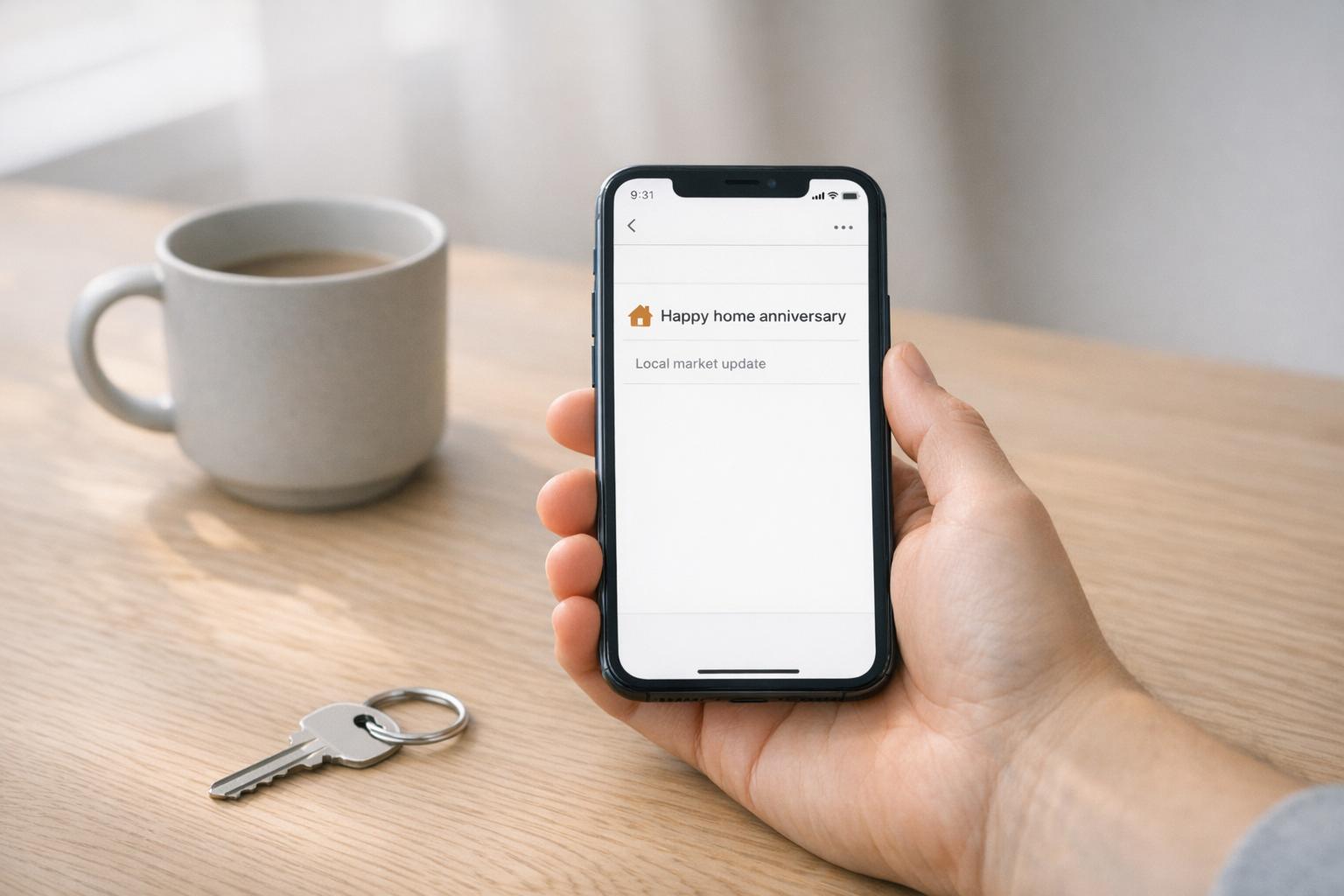
- Automated reminders: Celebrate birthdays, home anniversaries, and other key dates with thoughtful messages or small gestures.
- Share local insights: Send neighbourhood-specific market updates to keep clients informed and engaged.
- Leverage AI for follow-ups: AI can draft emails based on past conversations, saving time and ensuring accuracy.
- Track transactions: Use AI to monitor purchase dates and equity growth, identifying referral or repeat business opportunities.
The key is combining automation with personal touches, helping you maintain relationships and grow your business efficiently.
My Secret Strategies for Client Retention in Real Estate!
Use Email Intelligence to Personalize Your Outreach
One of the biggest challenges in staying connected with clients is the sheer amount of manual work involved. Traditional methods require agents to log every interaction, set reminders, and keep track of individual preferences - an exhausting process. The goal is to maintain strong, meaningful relationships without piling on extra tasks. This is where email intelligence tools step in, automating the process by scanning your inbox to create detailed client profiles. No manual data entry required. This approach allows for more targeted and effective communication.
Let AI Build Client Profiles from Your Emails
Email intelligence platforms are designed to analyse your inbox and automatically generate dynamic client profiles. These tools capture valuable details like transaction history, key dates, and communication preferences directly from your emails 7. For instance, if a client mentions they prefer text messages due to having young children, the system will flag that preference for future outreach.
Take the experience of Carlin Koster from Redline Real Estate Group Inc., who shared a relatable example:
"Do not ever call me unless I ask you to. I have two young children. I'm never going to answer the phone."
When Koster followed up to ask what method worked best, the client replied:
"Can you please text me?" 1
These platforms go a step further by tracking behavioural data, such as which property listings clients click on or which neighbourhood reports they open. This information helps trigger follow-up actions that are grounded in past interactions 67. By building these detailed profiles, you can craft communications that feel relevant and personal.
Write Messages That Matter to Each Client
With detailed profiles in hand, you can create messages that move beyond surface-level personalization. Instead of generic greetings, reference specifics like job titles, personal milestones, or local market trends. This level of detail can boost cold email reply rates by as much as 142% 9.
For example, rather than saying, "Just wanted to check in", try offering value by sharing a quick market update. You might note how properties in your client's postal area have appreciated this year, hinting that their home's value may have risen 2. Incorporating personal details - like their children’s names, favourite pet, or sports team - can further show your commitment to the relationship beyond just real estate 23.
AI-powered tools like Lavender can even analyse your email's tone, structure, and clarity in real time, suggesting ways to align your message with the recipient’s communication style 8. If a client prefers short, casual messages, match their tone. On the other hand, if a client has stopped engaging with frequent emails, consider switching to less intrusive methods like occasional market reports or social media updates 2.
"AI can give you a great starting point, but consider adding a personal touch before hitting send. Small tweaks... can make all the difference in making your emails feel authentic and engaging." – realtor.com® PRO 8
The key is to treat AI-generated drafts as a starting point, not the final product. Before sending, add a personal touch - perhaps referencing a property they admired or congratulating them on a recent milestone. This "human-in-the-loop" approach ensures your outreach feels genuine while leveraging the efficiency of automation 8.
Set Up Smart Reminders for Client Milestones
Automated reminders can help you remember key dates - like birthdays, home purchase anniversaries, and other meaningful milestones - so you can connect with clients in a thoughtful, personal way.
Acknowledge Birthdays, Anniversaries, and Home Purchase Dates
Reaching out for milestones should feel genuine and celebratory, not like a sales pitch. For instance, when a home purchase anniversary rolls around, a simple message can go a long way. You might say something like, "Can you believe it's been three years since you bought your home? Hope you're still loving the space!"2.
Modern tools can scan your emails for important details like closing dates, birthdays, and family information, taking the hassle out of manual tracking. By staying present during these personal moments, you'll increase the chances of being remembered when your clients' friends or family ask for recommendations.
Sandra Pike from The Pike Group at Royal LePage shared her strategy:
"As soon as the deal is closed, whenever [it's the client's] birthday, I would automatically send a birthday card."1
For bigger milestones, such as a first-year home anniversary, consider pairing your automated reminder with something more personal, like a handwritten card or a small gift. These gestures often leave a stronger impression than a digital message alone35.
Beyond celebrating milestones, staying in touch with consistent, relevant updates ensures your communication remains valuable.
Share Market Updates with Canadian Data
Between personal milestones, sending local market updates is a great way to reinforce your role as a trusted resource. Just like milestone reminders, these updates help nurture long-term relationships.
Focus on data that’s specific to your client’s neighbourhood or postal code instead of broad national trends. Clients appreciate updates that include details like median home prices (in CAD), days on market, and inventory levels. Sharing this kind of hyper-local information shows you’re tuned in to their community.
Send these updates monthly or quarterly to strike a balance between staying visible and avoiding inbox fatigue. Translate the numbers into practical insights, like how local trends might affect their home equity. A simplified Comparative Market Analysis once or twice a year can also be helpful, showing clients their home’s current value without any sales pressure4.
To add even more value, consider including a list of trusted vendors. Since about 73% of sellers make at least one home improvement before listing their property4, offering recommendations for reliable professionals can strengthen your role as a go-to advisor. Always include an easy opt-out option to respect client preferences and maintain trust2.
Create and Review AI-Generated Follow-Up Emails
AI tools can help you draft follow-up emails by analysing your past conversations - think of these drafts as a helpful starting point. This method not only saves time but also ensures your personal voice comes through while keeping every detail accurate.
Generate Email Drafts Based on Past Conversations
AI can scan your email history to create drafts that reference specific details from earlier exchanges. For example, if a client mentioned plans for a kitchen renovation last spring, the AI might include that detail in a new email, making your message feel timely and relevant rather than impersonal.
When generating a draft, provide the AI with clear instructions about the tone, goal, and context. For example, you might ask for a "friendly and conversational" tone, set the goal as "reconnect and provide a market update", and include relevant details about the client's situation.
Once the draft is ready, review it carefully to ensure it feels natural and accurate. If any phrases seem stiff or overly formal, tweak them to match your natural communication style. Replace generic greetings with something more personal and add any specific details the AI might have missed, like a recent community development or a shared connection. This process ensures that each follow-up feels thoughtful and strengthens your client relationships.
Next, adjust the draft to fit your client’s preferred communication style.
Match Your Client's Communication Style
The tone of your email is just as important as the content. Some clients appreciate short, casual messages, while others expect a more formal tone. AI tools can analyse your client’s previous emails to suggest changes that align with their preferences.
For example, if a client typically writes brief and direct emails, the AI can help you streamline your message by cutting unnecessary words. On the other hand, if they usually send longer, detailed responses, you can expand the draft to include more context and explanation. This tailored approach shows you're paying attention to their individual preferences, making your communication more effective.
"The goal isn't just to avoid sounding like a robot. It's to sound like the most informed, relevant, and helpful version of yourself, in every single email." – Pierre Dondin, Topo 10
Use Transaction Tracking to Find Referral Opportunities
Your past transactions can be a treasure trove of insights to help you reconnect with clients or identify referral opportunities. By keeping track of purchase dates, property types, and equity growth, you can pinpoint when a client might need your services again or when they could refer someone. The idea is to share relevant, timely information so you’re seen as a trusted resource - not just another salesperson. This approach also sets the stage for automated tools to efficiently manage client data.
Let AI Organize Your Transaction Data
AI can take the hassle out of data organization by creating a central hub for your clients' property details. This includes information like closing dates, mortgage terms, and even equity growth. For instance, if a client bought a starter home three years ago, AI tools can flag it as a potential time for a move, based on typical ownership cycles. These systems also track market trends in your client’s neighbourhood, allowing you to send personalized home equity reports in CAD. These reports compare their current estimated property value to the original purchase price - valuable insights delivered without the need for immediate action.
"Everything you send out to a former client has to have some pertinent, valuable information to them, otherwise they'll disregard your messages completely." – Cheryl Hanna, Keyes Co. 11
The key here is to offer something useful, like a brief equity update, that keeps you relevant without being pushy.
Get Alerts for Referral Opportunities
Once your transaction data is organized, automated alerts can help you act on key opportunities. AI tools can notify you when a client’s home purchase anniversary rolls around, giving you the chance to send a personalized neighbourhood market update. You can also set reminders for tax season, making it easy to share their closing statement to assist with tax preparation. These thoughtful touches not only keep you on their radar but also add genuine value.
The numbers speak for themselves: 7 out of 10 deals for high-income REALTORS® come from past clients and referrals 13. Yet, despite 88% of home buyers saying they’d work with their agent again, only 17% actually do. Why? Because 91% of agents fail to follow up after closing 12. Automated tracking ensures you stay connected during key moments, keeping the door open for future business and referrals.
Manual CRM Work vs. Automated Relationship Tools
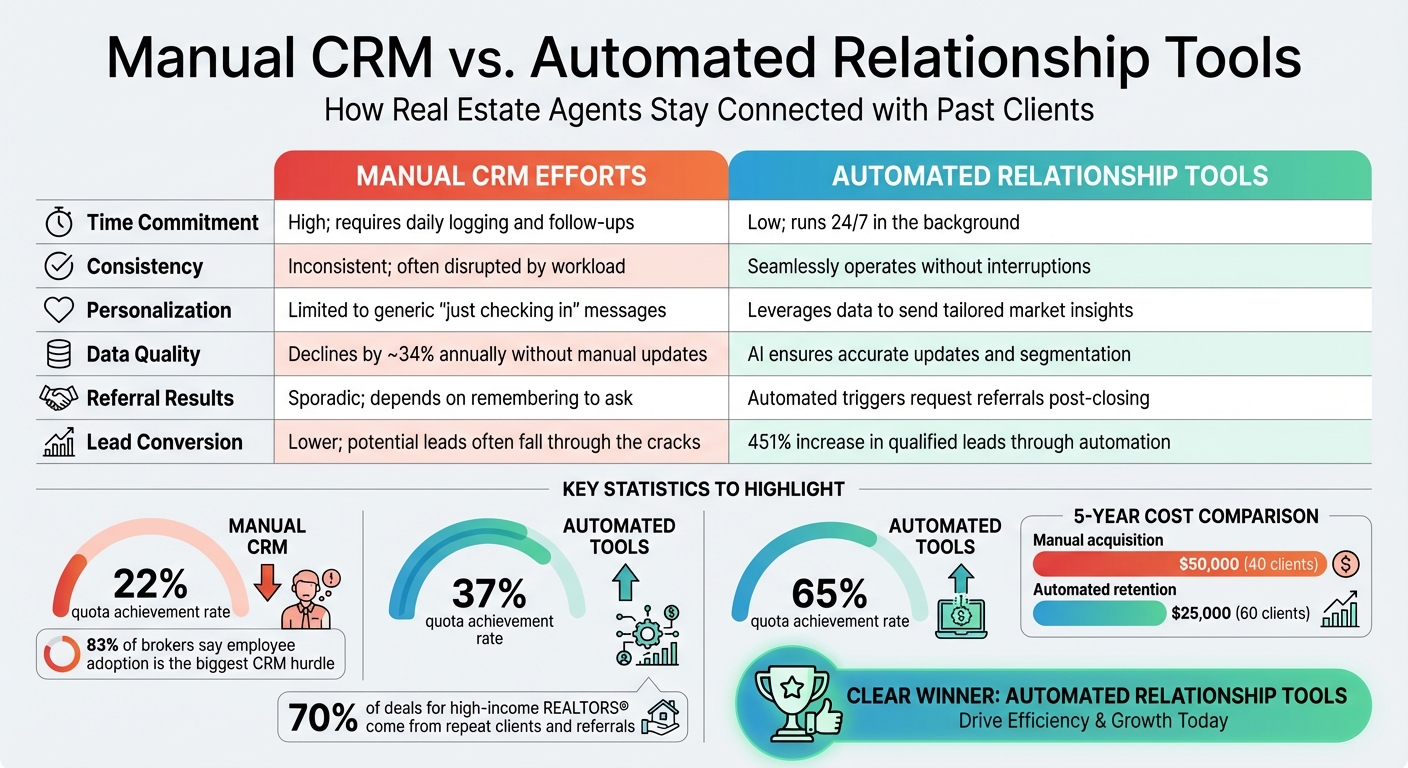
Real estate agents understand the importance of staying connected with their network, but let’s face it - manually entering data feels more like tedious admin work than a way to generate revenue. This disconnect between intention and action is a common pain point. In fact, 83% of brokers say employee adoption is the biggest hurdle to CRM success 13.
The numbers tell the story: agents relying solely on manual processes hit their sales quotas just 22% of the time, while those using automated tools succeed at a much higher rate - 65% 13.
"Randomly engaging with your SOI when you have free time is not just unsustainable - it holds you back from your growth potential." – MoxiWorks 14
Automated relationship tools change the game. They automatically sync with your email to log conversations, flag key dates like birthdays or home purchase anniversaries, and use AI to segment your contacts by their stage in the buying or selling journey. This ensures every client gets tailored communication. The difference between the two approaches becomes even more striking when you compare the metrics side by side.
Time, Personalization, and Referral Results Compared
Here’s how manual CRM efforts stack up against automated tools:
| Feature | Manual CRM Efforts | Automated Relationship Tools |
|---|---|---|
| Time Commitment | High; requires daily logging and follow-ups | Low; runs 24/7 in the background |
| Consistency | Inconsistent; often disrupted by workload | Seamlessly operates without interruptions |
| Personalization | Limited to generic "just checking in" messages | Leverages data to send tailored market insights |
| Data Quality | Declines by ~34% annually without manual updates 14 | AI ensures accurate updates and segmentation |
| Referral Results | Sporadic; depends on remembering to ask | Automated triggers request referrals post-closing |
| Lead Conversion | Lower; potential leads often fall through the cracks | 451% increase in qualified leads through automation 14 |
The financial benefits are equally compelling. Over five years, an automation-driven retention strategy costs about $25,000 and brings in 60 clients. Compare that to a new acquisition-focused effort, which costs upwards of $50,000 and yields only 40 clients 13. Given that 70% of deals for high-income REALTORS® come from repeat clients and referrals 13, automation clearly delivers better results.
It’s not about losing the personal touch - it’s about making sure that touch happens reliably, with the right timing and message. Automation doesn’t just save time; it ensures your client communication is consistent, meaningful, and value-driven.
Conclusion
Delivering timely, tailored messages is at the heart of effective outreach, and smart automation can make this process seamless. Relationship intelligence tools tackle one of the biggest challenges agents face: maintaining strong client connections without drowning in manual tasks. These tools keep track of important dates and past interactions, ensuring no opportunity slips through the cracks.
The stats back this up: 84% of sellers are likely to work with or refer the same agent11.
"It's all about making it personal, making it magic, and making the experience unforgettable so that two or 10 years down the road they'll remember to call you." – Cheryl Hanna, Real Estate Professional11
The secret lies in blending automation with authenticity. Tools that analyse your communication style and allow for final approval give you the best of both worlds: efficiency and a personal touch. They help you maintain your unique voice while saving time.
FAQs
Tags
Ready to fix follow-up?
Try inbox-first relationship management free for 14 days. No credit card required.
Start Free Trial