
Table of Contents
7 Ways to Leverage Your Email Inbox for Client Engagement
Use your email inbox to organize clients, track behaviour and milestones, personalize messages and improve engagement and referrals.
7 Ways to Leverage Your Email Inbox for Client Engagement
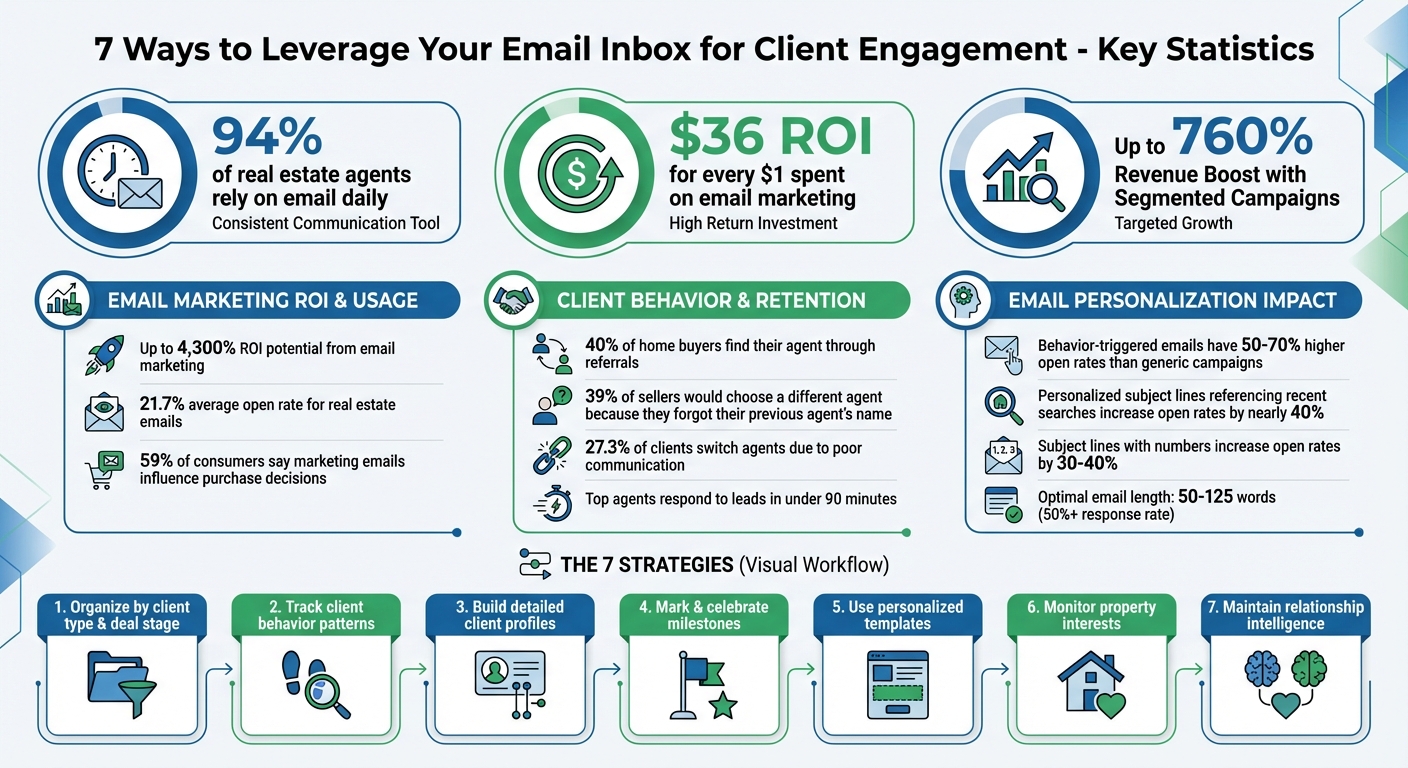
Your email inbox is more than a communication tool - it's a powerful resource for building lasting client connections. With 94% of real estate agents relying on email daily and an ROI of $36 for every $1 spent, email remains the most cost-effective way to engage clients. Here’s how you can make your inbox work for you:
- Organize emails by client type and deal stage to ensure no one gets overlooked.
- Track client behaviour to send timely, personalized follow-ups with higher open rates.
- Build detailed client profiles from email conversations to strengthen relationships.
- Mark milestones like closing anniversaries to stay top of mind.
- Use templates thoughtfully to save time while keeping messages personal.
- Monitor property interests across threads to refine recommendations.
- Structure your inbox with labels and reminders to manage relationships effectively.
Email isn’t just about sending messages - it’s about using every interaction to build trust, maintain communication, and drive referrals. By staying organized and attentive, you can turn your inbox into a relationship-building powerhouse.
1. Organize Your Inbox by Client Type and Deal Stage
Why It Matters for Real Estate Agents
A cluttered inbox isn't just frustrating - it can cost you business. When emails pile up without a system, important messages can get lost, and that’s a risk no agent can afford. DeAnn Hawkins from Shaker explains:
"When your inbox is backed up, it's all too easy to miss an email or, worse, risk a contract expiring and falling through" 7.
For Canadian real estate agents managing multiple deals, this could mean losing a client or jeopardizing a closing. Staying organized isn’t just about tidiness - it’s about staying on top of relationships and transactions.
One way to take control is by sorting emails based on client type (buyers, sellers, investors, past clients) and deal stage (new leads, active search, under offer, closed). Why? It gives you a clear picture of where every client stands. And that matters - a whopping 27.3% of clients switch agents because their previous agent didn’t maintain proper communication 3. By organizing your inbox strategically, you can ensure no one falls through the cracks.
Simple Steps to Streamline Your Inbox
To keep everything in order, lean on tools that make email organization easier. Gmail’s label system is a great example. Unlike folders, labels allow you to tag a single email with multiple categories. Here’s how to get started:
- Create parent labels for broad client categories like Buyers, Sellers, and Past Clients.
- Add sub-labels for specific client names or properties. For example, under “Sellers,” you might have labels like “Smith Family - 45 Maple Ave” or “Johnson - Downtown Condo.”
Take it a step further by colour-coding your labels. Assign colours for quick identification - red for hot leads, green for deals under contract, and blue for past clients. It’s a simple way to visually prioritize your inbox. Automated filters can also save you time by sorting incoming emails into the right labels based on sender or keywords. And don’t forget Gmail’s “Nudge” feature, which can remind you about emails that need a reply.
Building Stronger Relationships Without Fancy Tools
Even without automation or a CRM, a well-organized inbox can become your best tool for managing client relationships. Each email thread becomes a record of client preferences, budget discussions, and neighbourhood interests. This kind of manual organization turns your inbox into a goldmine of insights.
And the benefits are huge. Segmented email campaigns, for example, can boost revenue by up to 760% 3. When you know exactly where each client is in their journey, your follow-ups naturally become more relevant and timely. Instead of deleting old emails, archive them so they remain searchable without cluttering your active inbox. This keeps you organized and ensures you’re always ready to engage with clients in a meaningful way. It’s a straightforward approach that helps you stay focused, efficient, and relationship-driven.
2. Read Email Patterns to Personalize Your Follow-ups
Relevance to Real Estate Client Engagement
Your email inbox can be a goldmine of insights - if you know how to interpret it. Every action a client takes, whether it's opening an email, clicking on a property link, or asking specific questions, sheds light on their priorities. The problem? Many agents are so focused on sending the next email that they overlook the valuable clues hidden in the last one.
Here’s why this matters: behaviour-triggered emails, like those sent after a client searches for a property, boast open rates that are 50% to 70% higher than generic, time-based campaigns 8. That’s not just a slight improvement - it’s a game changer. By paying attention to what clients are actually doing, you can turn follow-ups into meaningful conversations rather than just another email in their inbox.
Actionability for Inbox-Driven Strategies
Once your inbox is organized, it becomes easier to track client behaviour and refine your follow-up approach. Pay attention to what they click on and when they engage. For instance, if a client frequently checks out condos in a specific area or asks about nearby schools, use that information. Instead of sending a generic market update, craft a follow-up like: "New Price Drop on Park Avenue – Matches Your Recent Search". This type of personalization can increase open rates by nearly 40% 8.
Timing also plays a role. Statistics suggest weekday mornings are ideal for sending data-heavy emails, while evenings and weekends work better for casual content 108. And don’t ignore patterns - if a client consistently replies on Tuesday afternoons, schedule your follow-ups for that time. Also, leverage the 24-hour rule: send a follow-up email within 24 hours of a property showing to make the most of their fresh impressions and enthusiasm 4.
Enhance Relationship Intelligence Without Automation or CRMs
You don’t need fancy tools to make your inbox work for you. The questions clients ask - whether about schools, financing, or commute times - are windows into their priorities 64. Keep your emails concise; the sweet spot for response rates is between 50 and 125 words, with an average response rate just over 50% 11.
To stay organized, create a simple manual system. Group email threads by the type of content clients engage with most. Some clients might appreciate detailed market reports, while others prefer stories about the neighbourhood and community. Tailoring your communication to these preferences isn’t guesswork - it’s a direct response to their behaviour. This approach transforms your inbox from a static tool into a dynamic relationship builder, helping you stay top of mind when clients are ready to take the next step.
3. Build Client Profiles from Email Conversations
Relevance to Real Estate Client Engagement
Your email inbox isn’t just a collection of messages - it’s a treasure trove of client insights. Every thread holds pieces of your relationship: how you met, shared interests, family details, and recent conversations. These go far beyond a name and phone number. Considering that 94% of real estate agents rely on email daily 1 and 40% of home buyers find their agent through referrals 124, these small details can make or break your ability to build trust and encourage repeat business.
The difference between a forgettable follow-up and one that resonates often lies in these little details. Did a client mention their dog? Do they love a specific neighbourhood? These tidbits are gold for creating authentic connections. RealOffice360 breaks it down perfectly: "The more context you have about each relationship, the more meaningful your interactions become" 13. That’s the kind of rapport that turns occasional clients into lifelong supporters.
Actionability for Inbox-Driven Strategies
Your inbox is already packed with the information you need to refine client profiles - it's just a matter of putting it to work. Go through your email threads and look for those "passing mentions" of personal details: birthdays, anniversaries, family members, pets, hobbies, or even favourite neighbourhoods 13. These small, often-overlooked details can help you build a more complete picture of your clients. Use a simple tracking system, like a spreadsheet or Gmail Labels, to keep this information alongside property-specific preferences, such as must-have features or current home details 135.
Once you’ve gathered this information, organize your contacts by priority. A high, medium, or low priority system can help you decide where to focus your follow-ups 12. Also, pay attention to their communication preferences. Do they respond faster in the morning? Do they take a few days to reply? Noticing these patterns allows you to respect their time and boost engagement rates 135.
Enhance Relationship Intelligence Without Automation or CRMs
You don’t need expensive tools to build effective client profiles - your email history is already a goldmine. Before reaching out, take a moment to scan past conversations. Look for specific details about their lifestyle preferences, like proximity to schools, commute times, or community interests 5. Referencing these details shows that you’re not just focused on the transaction - you genuinely care about the person.
"Your database is the heart of your real estate business... your relationships are the blood that keeps it alive." – RealOffice360 12
Instead of deleting old emails, archive them to preserve a searchable history of evolving client preferences 7. This habit allows you to transform cold leads into warm connections by showing genuine interest in their lives - not just their next real estate deal.
4. Track Client Milestones Through Email
Why Milestones Matter in Real Estate Relationships
Remembering milestones like closing dates and anniversaries is more than just a nice gesture - it’s a way to build trust and stay connected. Consider this: 39% of sellers would choose a different agent for their next transaction simply because they forgot who they worked with before 3. On top of that, 27.3% of clients switch agents because their previous agent didn’t keep in touch 3. With 40% of buyers finding their agent through referrals 4, staying in your clients’ minds isn’t just good practice - it’s crucial for your business.
Your email inbox is a goldmine for tracking these milestones. Key dates like closing days, offer confirmations, or even casual mentions of birthdays are often buried in past email threads. As one industry expert puts it:
"A home purchase is one of the biggest milestones in a person's life. By acknowledging it each year, you remind clients that you're still there for them." - Realtor.com 4
By recognizing these moments, you move beyond being just a one-time service provider and position yourself as a trusted adviser for the long haul.
Turning Emails Into Actionable Client Engagement
To get started, dig into your inbox for keywords like "closing", "offer accepted", or "congratulations" to pinpoint important dates. Once identified, use tools like scheduled sending to plan anniversary emails right after a deal closes 4. Timing is key: for example, send a feedback request within 24 hours of a property showing to capture fresh impressions 4. When submitting an offer, follow up daily until you get confirmation 5. Adding a personal touch - like referencing details from previous conversations - makes these milestone messages even more meaningful 5.
Stay Organized Without Fancy Tools
You don’t need expensive software to keep track of these details - your email history already has everything you need. Archive threads to easily revisit and pull out personal details for milestone emails. For instance, on a home anniversary, mention something memorable from their move-in day or a home improvement project they shared 5. Milestone emails sent on meaningful dates boast open rates 50% to 70% higher than standard campaigns 8. Instead of pushing a sales pitch, offer something useful: seasonal home maintenance tips, a vendor discount, or a local market update 4.
Your email inbox isn’t just a communication tool - it’s a relationship-building powerhouse when used thoughtfully.
5. Use Email Drafts and Templates for Personalized Messages
Relevance to Real Estate Client Engagement
Emails are a cornerstone of daily communication for real estate agents. Using templates can simplify repetitive tasks like reaching out to prospects, following up after showings, or submitting offers. But here's the catch: templates need to feel personal. The trick is blending efficiency with a genuine touch, so your emails don't come across as robotic or impersonal.
The secret sauce? Personalization. It’s not just about plugging in a client’s name - it’s about showing you’ve been paying attention. For instance, instead of a generic message, reference something meaningful from a past conversation, like their desire for a big backyard for their dog or their interest in a specific neighbourhood. This small effort can go a long way in building trust and showing clients that you truly care about their needs. As Emile L'Eplattenier from HousingWire explains:
"Real estate email templates are a proven shortcut to building and maintaining relationships that get you to the closing table faster and more often" 15.
By turning routine emails into personalized interactions, you can deepen client relationships and showcase your attentiveness.
Actionability for Inbox-Driven Strategies
Start by building a small collection of email templates tailored to common scenarios - think initial outreach, follow-ups after showings, market updates, or even home anniversary greetings. Keep these templates straightforward and conversational. Avoid overly polished designs that might land your email in the "Promotions" folder 15.
When it’s time to send, don’t rely solely on the template. Take a moment to customize the message based on your previous interactions. For example, if a client loved the kitchen during a showing, mention it: "You seemed really excited about the open-concept kitchen - let me know if you have any more questions about the property." For market updates, skip generic national trends and focus on hyper-local insights. Reference specific neighbourhoods, postal codes, or even nearby landmarks to show off your expertise 5.
Behaviour-triggered emails - like notifying a client about a price drop on a property similar to one they viewed - can be game-changers. These emails perform 50% to 70% better than traditional time-based campaigns 8. Not only do they save you time, but they also help build stronger, more personal connections with your clients.
Ability to Enhance Relationship Intelligence Without Automation or CRMs
Email drafts offer more than just convenience - they’re a great way to capture and remember key client details. Whether it’s their pet’s name, plans for a home office, or a preferred school district, jotting down these tidbits in your drafts can help you craft messages that feel thoughtful and genuine.
Timing is another factor to consider. For new leads, quick responses signal that they’re a priority. For existing clients, sending follow-ups early in the workday can show they’re top of mind 5. And don’t underestimate the power of a strong subject line. Including specific numbers or creating curiosity can significantly boost open rates. For example, "3 new listings in Ashbury Heights under $1.2 million" or "The surprising shift in [Neighbourhood] prices this month" can make your email stand out. In fact, subject lines with numbers can increase open rates by 30% to 40%, and those referencing a client’s recent search can boost open rates by nearly 40% 8.
6. Monitor Property Interests Across Email Threads
Relevance to Real Estate Client Engagement
Your email inbox is more than just a communication tool - it's a treasure trove of client preferences. Each thread can reveal what buyers truly want, from their preferred property types and neighbourhoods to specific features they repeatedly mention. For instance, if a client frequently asks about properties in a particular postal code or comments on an open-concept layout during a showing, those details can help you refine your recommendations.
The stats are compelling: 59% of consumers say marketing emails influence their purchase decisions 2. On top of that, segmented email campaigns can lead to a 760% increase in revenue for real estate professionals 16. By paying close attention to what clients engage with in your email exchanges, you position yourself as someone who truly understands their needs. This level of attentiveness not only builds trust but also ensures you won’t miss out on key opportunities 3.
Actionability for Inbox-Driven Strategies
Take a closer look at past email threads to uncover patterns. Notice which property types, neighbourhoods, or features spark the most interest. For example, if a client consistently asks about homes near schools or parks, flag those details as priorities.
You can also use filters and keywords - like street names or neighbourhoods - to automatically sort incoming emails. When a client mentions a specific feature they loved or disliked, tag that thread manually so you can easily reference it later. After each showing, follow up within 24 hours with open-ended questions like, "What stood out to you about the layout?" This approach not only captures their preferences but also keeps the conversation flowing 4.
Organizing these insights allows you to fine-tune your recommendations with greater accuracy.
Enhancing Relationship Intelligence Without Automation or CRMs
Even without advanced tools, your inbox can double as a powerful relationship management system. Each email thread holds valuable clues about your client’s priorities. Before sending a new listing, revisit past conversations to note if they mentioned a specific postal code or expressed a need for a home office. Referring back to these details shows that you’ve been listening and helps you deliver personalized suggestions 5.
"Personal emails are so much powerful than generic emails. In my sales training, this is often mentioned! Less is more." – Nicole Attias 2
7. Maintain Relationship Intelligence with Email Organization
Relevance to Real Estate Client Engagement
Your inbox isn’t just a communication tool - it can become a powerful system for managing client relationships. By organizing your emails effectively, you can turn routine messages into a strategic advantage. This helps you stay on top of client preferences, track key milestones, and spot opportunities to reconnect.
Here’s why this matters: if you neglect email organization, you risk becoming just another forgotten name. 39% of sellers admit they’d choose a different agent for their next transaction simply because they forgot their previous agent’s name 3. On top of that, 27.3% of clients switch agents due to poor communication 3. A well-structured inbox ensures you avoid these missteps by keeping important relationship details front and centre.
Actionable Strategies for Email Management
To keep your inbox under control, try the 5 D's of Management: Defend, Delete, Do, Delegate, Defer. This approach helps you tackle emails systematically and avoid overwhelm 19.
Another effective tactic is the 321-Zero Method: limit email checks to 3 times a day, with 21-minute sessions each time 20. This batching method minimizes decision fatigue and keeps your focus sharp. If your inbox is already drowning in 2,000+ messages, consider a Visual Reset. Move everything older than 30 days into a designated folder (e.g., "Archive Pre-[Year]") to reduce clutter while keeping older emails searchable 20.
For better organization, use manual segments and colour-coded labels to prioritize client interactions. For instance:
- Red: urgent active deals
- Blue: long-term nurturing
- Green: past clients
This system allows you to quickly identify where to focus your attention 7 17.
Leveraging Email History to Strengthen Client Relationships
Your inbox isn’t just for incoming messages; it’s also a treasure trove of client insights. Before reaching out to a past client, a quick search of their name can reveal previous conversations, helping you recall their needs and preferences. This small step can make your follow-ups more personal and effective.
You can also track milestones like home purchase anniversaries by combing through old emails and setting calendar reminders for meaningful follow-ups 14. A simple “happy anniversary” email can keep you top-of-mind and show clients you care.
To stay organized, group your contacts into relationship tiers:
- A-List: Inner circle, with a ~95% chance of referrals
- B-List: Friends who may need a nudge, ~75% chance of referrals
- C-List: Past clients with ~50% chance of referrals
- D-List: Cold leads, less than 10% chance of referrals
This tiered approach ensures your follow-up efforts are focused where they’ll have the most impact 12.
"Email overload stems from choice overload. Every message represents a decision: respond now, respond later, delegate, file, delete, or ignore. When you open an inbox with hundreds of messages, you're not looking at communication. You're staring at hundreds of unmade decisions."
– Jones Loflin, Time Management Expert 20
Finally, it’s worth noting that email marketing can deliver incredible returns. On average, it generates $36 for every $1 spent 18 17, while real estate emails see an average open rate of 21.7% 17. By keeping your inbox organized and leveraging it as a relationship tool, you can tap into these opportunities without the need for complex CRM systems.
5 Email Organization Tips for Real Estate Agents with TUTORIALS!!
Conclusion
Your inbox is more than just a place to store emails - it’s the backbone of your client relationships. The seven strategies we’ve explored - organizing your inbox, analysing reading patterns, creating detailed profiles, tracking milestones, using personalized drafts, monitoring client interests, and maintaining relationship intelligence - can turn everyday communication into a powerful tool for generating referrals.
The numbers speak for themselves: email marketing can yield an ROI of up to 4,300% 9. Yet, many agents miss out on this potential, with clients often switching agents simply because their previous agent didn’t stay in touch 3. The difference between being forgotten and being recommended lies in how effectively you use the conversations already sitting in your inbox.
Being organized and responsive isn’t optional for success. Top-performing agents respond to leads in under 90 minutes 3, using their inbox as a resource to recall client-specific details that build trust over time. By incorporating these strategies into your daily workflow, you’ll create meaningful connections that last. When you embrace these tactics, you’re not just managing emails - you’re cultivating the trust and familiarity that drive client loyalty 2.
Why not start small this week? Try colour-coding your contacts, setting reminders for key milestones, or revisiting past conversations. Each simple step strengthens your ability to stay top of mind with clients. Improving your email habits today lays the groundwork for stronger, long-lasting relationships tomorrow.
FAQs
Tags
Ready to fix follow-up?
Try inbox-first relationship management free for 14 days. No credit card required.
Start Free Trial