
Table of Contents
Client Follow-Up Checklist for Busy Real Estate Agents
Email-first follow-up checklist for real estate agents: segment contacts, automate key dates, use AI drafts and multi-channel touches to convert more leads.
Client Follow-Up Checklist for Busy Real Estate Agents
In real estate, consistent follow-ups can make or break your business. Yet, many agents struggle with lost leads, fading client relationships, and missed referrals. Here’s a quick breakdown to help you stay organized and top-of-mind:
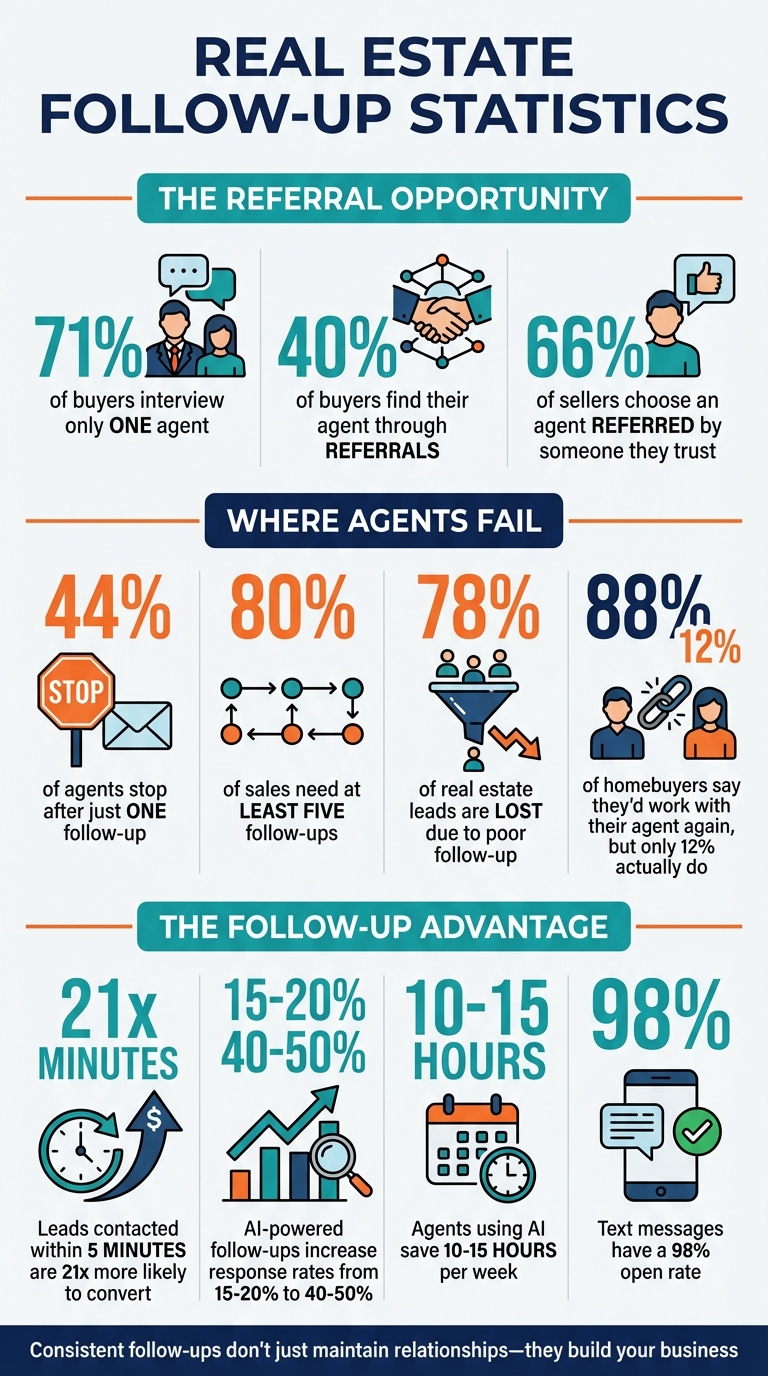
- Why Follow-Ups Matter: 71% of buyers interview only one agent, and 40% of buyers find their agent through referrals. Staying connected ensures repeat business and new opportunities.
- Key Challenges: 44% of agents stop after one follow-up, even though 80% of sales need at least five. Manual tracking often fails under the pressure of emails, leads, and transactions.
- Solution: Use email as your central tool. Organize contacts by relationship stage (active leads, past clients, referral sources), track key dates automatically, and leverage AI for personalized communication.
This follow-up checklist simplifies the process by focusing on email-driven strategies, automated tools, and clear follow-up schedules. Whether it’s responding to leads in five minutes or sending anniversary messages, these steps keep your clients engaged and your business thriving.
Real Estate Follow Up: How Often and What to Say to Convert Real Estate Leads #MarketAuthorityShow
Organize Clients by Relationship Stage
Sorting your inbox contacts by their relationship stage - like active leads, past clients, and referral sources - can help you communicate more effectively. This method ensures your energy is directed where it makes the biggest impact and prevents anyone from slipping through the cracks.
Active leads require quick responses and regular updates. Past clients benefit from occasional check-ins to maintain the connection and encourage repeat business. Referral sources thrive on consistent appreciation and relationship-building.
The stats speak volumes: 40% of buyers find their agent through a referral, and 66% of sellers choose an agent referred by someone they trust5. However, 88% of homebuyers say they'd work with their agent again, but only 12% actually do7. Why? Most agents fail to stay in touch after closing. Christine Clay from Top Producer® Systems sums it up best:
If you stay in touch you'll be top of mind when it's time for your clients to make a move or know someone who is
3.
Here’s how you can fine-tune your strategy for each group.
Active Leads
Active leads demand your immediate attention. Aim to respond within 5 to 15 minutes and follow up weekly to stay on their radar during property searches and showings74. Keep them engaged by sharing new listings that match their preferences, updates on price changes in their desired area, and feedback from showings. This shows you're dedicated to helping them find the perfect property.
Past Clients
Most agents stop reaching out once the deal is done, but this is a missed opportunity. Past clients already trust you, making them excellent sources for referrals and future transactions. Stay connected with quarterly market updates or a friendly home anniversary message. A quick check-in a week after they move, followed by another at the one-month mark, keeps the relationship warm without overstepping74.
Referral Sources
Referral sources are your champions - they recommend you to others, often without being asked. Yet, they’re easy to overlook. To keep these relationships strong, schedule quarterly check-ins. Share insights on local market trends, ask about their own plans, and casually remind them you're available if they know someone buying or selling. Staying visible ensures you remain their go-to recommendation34.
Build Client Profiles from Your Email
Organizing client segments is one thing, but creating detailed profiles from your emails takes it to the next level. Your inbox is a goldmine of client information - whether it’s property preferences, family details, transaction timelines, or communication habits. By using automated tools, you can transform this data into detailed client profiles without the hassle of manual entry. These profiles become the foundation for more personalized and effective follow-ups.
When you adopt an inbox-first follow-up system, every conversation is logged automatically, making it easy to reference past interactions. Considering that 94% of real estate agents rely on email daily 1, this feature is a game-changer. Modern tools can even pick up on small but meaningful details, like mentions of pets, family milestones, or preferred neighbourhoods 1314.
The real benefit? Instant context when you need it. Imagine a client reaching out six months after a deal closes. With their purchase date, property details, and past conversations readily available, you can respond with confidence and precision. These systems also keep profiles up-to-date automatically, solving the common issue of CRMs failing at long-term follow-up. Plus, inquiries from platforms like Zillow, Realtor.com, or Facebook Ads can be routed directly into the right client profile without any extra effort 10.
AI-powered tools take things a step further by summarizing email threads, identifying client preferences, and sorting emails by urgency. This ensures you never miss an important follow-up 1112.
On average, agents using AI for follow-ups save 10–15 hours per week 10. That’s time you can reinvest in building stronger client relationships. With these detailed profiles at your fingertips, you can deliver timely, personalized follow-ups that truly resonate.
Track Transactions and Important Dates Automatically
Forgetting a client's home anniversary or birthday can mean losing out on valuable referrals. Keeping track of these dates manually is not only time-consuming but also leaves room for mistakes, especially when juggling multiple deals. Thankfully, modern tools can now extract key dates - like closing dates and contingencies - directly from PDF contracts. These tools automatically generate transaction timelines, eliminating the need for manual entry and reducing the risk of errors 16. This streamlined process sets the stage for timely, automated follow-ups.
Once these dates are logged, automation takes over. For example, if a client closes on 15 March 2025, they’ll receive a personalized home anniversary message with tailored market updates exactly one year later, on 15 March 2026. The same process can be applied to birthdays and other key transaction milestones, ensuring no important date slips through the cracks 174.
"We have been able to reduce the amount of time spent managing a transaction significantly. This is a product we use every day... to manage transaction workflow and timelines." - Paul, Brokerage President/CEO 16
Taking it a step further, advanced systems include follow-up coaches that flag contacts you haven’t reached out to in 30, 60, or 90 days, helping you stay connected with leads 173. Plus, with two-way data synchronisation, any changes to a closing date automatically update all related reminders across your calendar, email, and transaction management software 18.
AI-powered data extraction processes contracts up to four times faster than manual methods 16, giving you more time to focus on building relationships. Dashboards that highlight upcoming milestones make it easy to reconnect with clients at just the right moment. These tools ensure your follow-up strategy remains sharp, efficient, and client-centred.
Create Personalized Follow-Ups with AI
Writing follow-up emails can quickly become overwhelming, especially when you're managing multiple clients at once. Thankfully, modern AI tools can step in to simplify this process. These tools can analyse your past email exchanges and create drafts that feel personal and relevant. For example, they might highlight a client's interest in a specific neighbourhood, reference family details they've shared, or mention property features they admired 19. By drawing from real conversations, these drafts feel authentic and tailored.
Of course, AI-generated drafts are just the starting point. Adding specific details - like a buyer's preference for a large backyard - shows you're truly listening and paying attention 19. Many AI tools also allow you to tweak the tone of the message with a single click. Whether you need a more professional approach or a warmer, consultative tone, you can easily adapt the message to suit the stage of your relationship. These small adjustments can make a big difference in how your emails resonate.
The importance of timely and effective follow-ups can't be overstated. Leads contacted within five minutes are 21 times more likely to convert compared to those contacted later 10. Yet, a staggering 78% of real estate leads are lost due to poor follow-up practices, and 44% of salespeople stop trying after just one attempt 20. Agents who use AI-powered follow-up tools have reported dramatic improvements, with response rates jumping from 15–20% to an impressive 40–50% 10.
"Standard, generic emails no longer cut it. To convert leads into loyal clients, you need a strategic communication plan built on value, personalization, and impeccable timing." - Saleswise 22
For maximum impact, keep your emails concise and include one clear call-to-action, like scheduling a showing, reviewing a market report, or answering a specific question 1915. Since 80% of buyers rank agent responsiveness as highly important 15, being prompt and clear is key. If a client doesn't respond, AI can help you reframe the message as a short SMS or a LinkedIn note 21. Every interaction is an opportunity to strengthen the relationship and move it forward 19.
Plan Your Follow-Up Schedule Across Channels
Creating a 12-month follow-up plan is key to maintaining strong client relationships. A simple approach like the "2+1" rule works well: aim for two digital interactions (such as market updates or seasonal advice) and one personal touch (a call or text) each month for past clients 23. For new leads, timing is everything - respond within five minutes, then follow up daily or every other day during the first week. After that, shift to weekly contact throughout the first month 26. The goal is to stay top of mind without overwhelming.
To make your follow-ups more effective, tailor your communication to the right channel. Automated profile updates and AI-driven personalization can help you decide how to connect. For instance:
- Texts (with their impressive 98% open rate 2) are ideal for quick updates or check-ins.
- Emails work best for sharing detailed information like reports or newsletters.
- Phone calls help build deeper, more personal connections.
- Social media messages are perfect for casual interactions.
Keeping track of all these touchpoints is crucial. Use tools that automatically log emails, calls, and texts in one central system. This way, you can easily reference past conversations, making your follow-ups feel thoughtful and personal instead of generic 47. Plus, with a centralized view, you’ll spot contacts you’ve unintentionally neglected, giving you a chance to reconnect before they lose interest 39.
A well-organized follow-up schedule can do more than just keep clients happy - it builds trust and loyalty. Consistent, meaningful follow-ups don’t just maintain relationships; they turn satisfied clients into a steady source of referrals. Missed opportunities due to poor follow-up habits can cost you repeat business, but a structured plan ensures you’re always one step ahead.
Review Relationship Data and Adjust Your Approach
Take time each week to review your follow-up performance. Start by digging into your email engagement metrics. For real estate, a solid open rate sits between 35–40%, while click-through rates should range from 2–5% 24. If your numbers fall short of these benchmarks, it’s time to tweak your approach. Experiment with more engaging subject lines or swap out generic calls-to-action for something specific, like "Find Out How Much Your Home Is Worth." Also, clean up your email list by removing hard bounces to maintain a deliverability rate above 95% 24. Once that’s done, identify which communication channels are driving the best results.
Pay attention to how your audience responds across different platforms. For example, if email engagement is low but text message replies are strong, shift your focus to texting 7. Email insights can also help you spot high-potential leads - those who frequently open your emails or click on property links are likely ready to act. These "hot" prospects should be your priority, and scheduling a dedicated follow-up time each week can ensure no opportunity slips through the cracks 25.
"You can't improve what you don't measure." - Real Agents Playbook 7
Set aside 2–3 hours every week for a Follow-Up Block. Use this time to analyse your relationship data, reconnect with overlooked contacts, and segment your database. Divide your leads into "Warm" (ready within three months) and "Cold" (six months or more) categories to fine-tune your outreach. This approach transforms your email inbox into a powerful tool for managing relationships, allowing you to focus on clients who are ready to move forward without wasting time on those who aren’t 25.
Keep an eye on spam complaints - they should stay below 0.3% to avoid overhauling your strategy 24. Similarly, if your unsubscribe rate climbs above 0.5%, it’s a sign that your content’s frequency or relevance needs adjustment 24. Regularly clean your database since CRM data tends to decay by about 34% annually. Removing inactive subscribers keeps your list accurate and ensures your email campaigns stay effective 14. This habit of ongoing refinement will keep your email-driven workflow running smoothly and efficiently.
How Tools Simplify Follow-Up Work
Using manual CRMs means spending valuable time logging calls, updating notes, and keeping contact records up to date. For busy agents, this can quickly turn into a tedious task that pulls focus away from what truly matters - your clients 26. On the other hand, email intelligence platforms handle this automatically by capturing interactions directly from your inbox. No more switching tabs or manually tracking every touchpoint 26.
Traditional CRMs often feel clunky for small teams, requiring extensive setup and configuration 26. In contrast, email intelligence tools can be ready to use in just two minutes 8. This quick setup is a game-changer when you're balancing showings, negotiations, and paperwork. By streamlining these processes, these tools create smoother communication workflows.
"We can get a lot more efficient with our day to day with AI to help with the mundane part of writing an email." – Director in Video Production, Copper CRM 26
AI-powered features take things even further by drafting emails, adjusting tone, and improving clarity automatically 2621. As Liane C., a Small Business Owner, shared:
"As a small business I love that Copper can keep my emails and tasks organized. The large CRM platforms were too much" 26.
Manual CRM vs. Email Intelligence Comparison
| Feature | Manual CRM Systems | Email Intelligence Platforms |
|---|---|---|
| Setup Time | Lengthy and complex; often overwhelming for small teams 26 | Rapid setup (e.g., 2 minutes) 8 |
| Data Entry | Manual logging of every interaction; high effort 26 | Automatic capture from inbox 26 |
| Email Drafting | Manual writing or static templates; prone to writer's block 26 | AI-powered drafting with tone adjustment 26 |
| Workflow | High context switching between inbox and CRM software 26 | Operates directly within Gmail or via browser extensions 26 |
| Follow-up Reminders | Requires manual task setting 3 | Automated sequences and AI-surfaced "quiet leads" 2621 |
These comparisons highlight how an inbox-first approach can revolutionize follow-up tasks. Tools like KivoAI take this a step further by analysing your email history to create client profiles and generate personalized drafts. Instead of manually entering transaction details or setting reminders, the platform identifies meaningful insights from your email conversations. You remain in control, as every draft requires your approval before it’s sent, saving you hours of manual work while keeping things efficient and personal.
Conclusion
Staying on top of follow-ups doesn't have to mean endless hours of manual effort or dealing with overly complex systems. The checklist here focuses on three key practices: organizing clients by their relationship stage, using email-based workflows, and relying on relationship data to maintain authentic connections. By grouping contacts into categories like active leads, past clients, and referral sources, you can fine-tune your communication to fit where each individual is in their journey.
Forget about logging every conversation by hand - tools that sync with your inbox can automatically gather client details, track key milestones, and even alert you to neglected contacts. This prevents the common issue of outdated or incomplete data.
While automation can handle the repetitive tasks, your personal insight is what truly strengthens client relationships. The key is finding the right balance: let automation handle the groundwork, but ensure every interaction feels personal. AI can help craft tailored follow-ups and adjust tone, but the final message should always reflect your voice and get your approval before it’s sent. With this approach, follow-ups become less of a task and more of an opportunity to build meaningful connections.
Considering that 90% of agents identify email as their go-to communication tool 1, adopting an email-first strategy makes practical sense. This approach aligns perfectly with tools like KivoAI, which transform your email history into detailed client profiles and generate context-aware messages - all while keeping you in control.
FAQs
Tags
Ready to fix follow-up?
Try inbox-first relationship management free for 14 days. No credit card required.
Start Free Trial