
Table of Contents
Building a Referral-Based Real Estate Business Effectively
Referral-focused agents win by prioritizing relationships, consistent follow-up, and simple systems that turn past clients into loyal advocates.

Building a Referral-Based Real Estate Business Effectively
Referrals are the backbone of a successful real estate business in Canada. They’re not just about trust - they’re about results. Here’s why they matter:
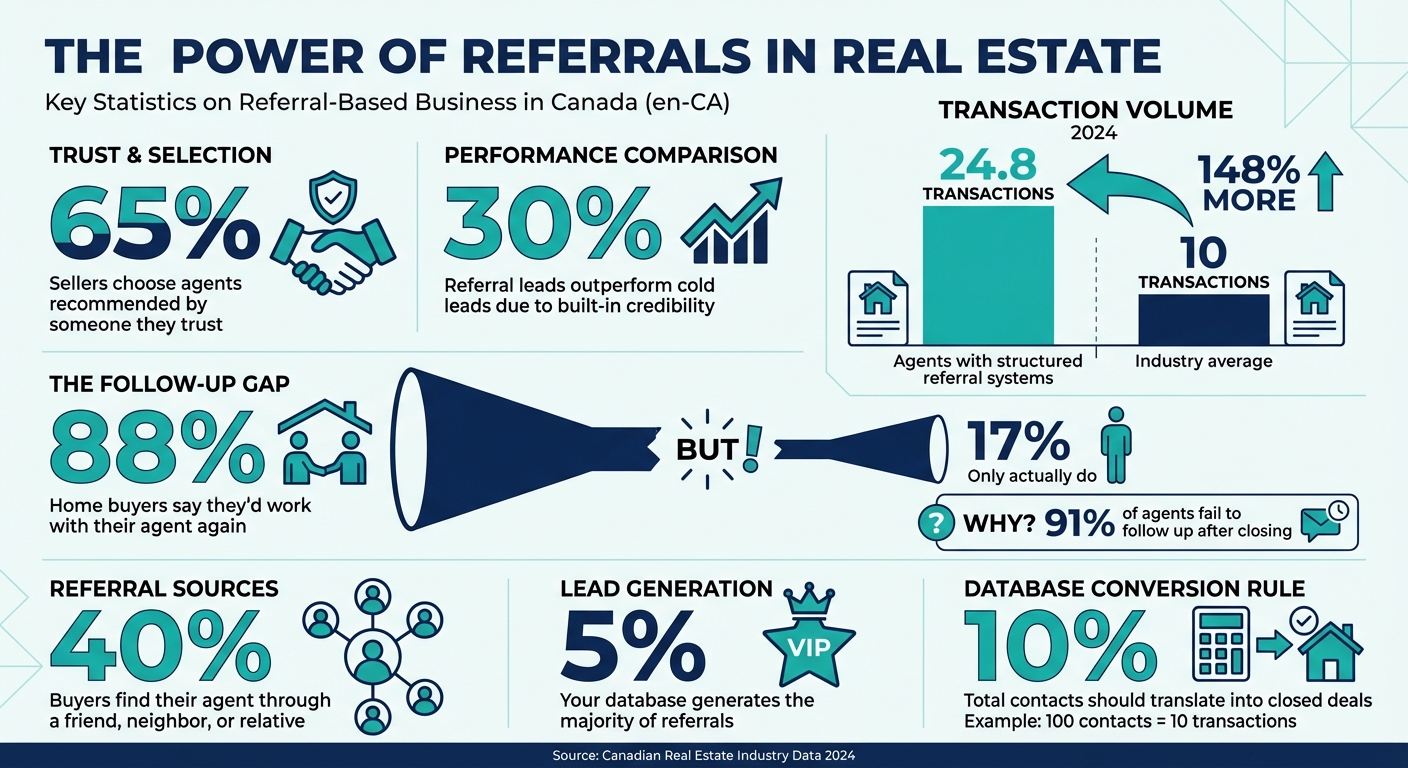
- 65% of sellers choose agents recommended by someone they trust.
- Referral leads outperform cold leads by 30% due to built-in credibility.
- Agents using structured referral systems averaged 24.8 transactions in 2024, compared to the industry average of 10.
The key? Focus on relationships, not just transactions. Stay connected with past clients, create a referral-friendly network, and use simple systems to track and manage leads. By prioritizing consistent follow-ups, personal touches, and timely requests for referrals, you can turn satisfied clients into your best marketing tool.
This guide breaks down actionable strategies to help you build a thriving referral network and maintain long-term success.
The Real Estate Referral System Every Agent Needs in 2026
Build Real Relationships with Your Clients
Referrals don’t come from transactions - they come from relationships. The difference between agents who struggle and those who excel often lies in how they maintain connections after closing a deal. Here’s a surprising stat: while 88% of home buyers say they’d work with their agent again, only 17% actually do. Why? Because 91% of agents fail to follow up after the transaction wraps up 12.
Instead of letting the relationship fade, focus on creating meaningful, personal interactions that show you genuinely care about your clients beyond the sale.
Stay in Touch with Past and Current Clients
Consistency is key when staying top-of-mind. Sporadic efforts won’t cut it. Many successful agents swear by the 90-Day Rule: reach out to everyone in your database at least once every quarter 18.
Organize your contacts into three groups based on their referral potential:
- A-List: Your inner circle.
- B-List: Extended friends and neighbours.
- C-List: Past clients and acquaintances 12.
When reaching out, use the F.O.R.D. Method - ask about their Family, Occupation, Recreation, and Dreams. This approach keeps conversations personal and engaging 1.
Mix up your communication methods. Send personalized emails, interact on social media, or write an occasional handwritten note - it’s the little touches that stand out 92.
You could also create a VIP program for past clients, offering annual home valuation updates or access to a trusted network of contractors and service providers 7. This keeps you top-of-mind as a reliable resource. As Cheryl Hanna, a real estate expert, explains:
"It's all about making it personal, making it magic, and making the experience unforgettable so that two or 10 years down the road they'll remember to call you." 10
Listen Carefully and Follow Up Meaningfully
Listening is more than just hearing - it’s about understanding. Go beyond square footage and price tags. Pay attention to what matters to your clients personally, like their hobbies or interests, and bring these up in future conversations to show you care.
Following up is your chance to add value. Share practical home maintenance tips, market updates, or even a list of new restaurants in their area 102.
Create moments that build trust and strengthen relationships. For example, send a moving-day survival kit with coffee, snacks, and essentials. Schedule regular check-ins - on moving day, 30 days later, and 90 days after closing. Then, offer an annual real estate checkup where you discuss how their home fits their needs and share updated market insights 8.
Show Appreciation to Earn Loyalty
Small, thoughtful gestures can make a big difference. According to the Peak-End Rule, people remember their experience based on its most intense moment and how it ended 13. A meaningful closing gift or a celebratory gesture can leave a lasting impression, even if there were bumps along the way.
Personalization matters more than price. A framed photo of their new home, a guidebook to their new neighbourhood, or even a simple red bow on their front door can create a memorable moment 1311.
Handwritten cards for birthdays, home anniversaries, or seasonal greetings also go a long way 1013. As Realtor.com PRO puts it:
"Trust isn’t built on big moves; it’s built on small moments." 13
Consider hosting annual client appreciation events. Skip the formal gala and opt for something more relaxed, like a neighbourhood picnic, a movie night, or a casual social gathering. These events allow families to reconnect in a laid-back setting and remind clients why they enjoyed working with you in the first place 98.
Lastly, spend just 10 minutes a day engaging with your clients on social media. Like their posts, comment on updates, or send direct messages to celebrate milestones like a new job or other achievements 98. These small, consistent interactions help keep the relationship alive and pave the way for future referrals.
Grow Your Referral Network
To grow your referral network, think beyond just your past clients. Consider partnering with local professionals who naturally interact with people during major life changes. These could include mortgage brokers, real estate lawyers, home inspectors, contractors, hairdressers, mechanics, or fitness instructors. Why? Because these partnerships thrive on reciprocity. If you send a client to a trusted mortgage broker or home stager, they’re more likely to return the favour. Cultivating these external relationships is just as important as maintaining client connections, creating a foundation for mutual referrals.
Partner with Related Professionals
Focus on building connections with professionals who complement your services. Mortgage advisors, real estate lawyers, home inspectors, movers, and home stagers often work with buyers and sellers at different stages of their journey. You can promote these partners on your social media platforms, feature them in newsletters, or refer your clients to them directly. Another idea? Add a "Preferred Partners" page to your website, showcasing trusted professionals. This could encourage them to feature you on their websites, creating a win-win situation.
Want to take it a step further? Co-host events to share audiences and boost your local presence. For example, team up with a lender or lawyer to host a first-time homebuyer workshop or a seminar on home valuations. These events not only let you pool contacts but also position you as a knowledgeable community resource. To keep your network growing, follow the "One-a-Month" rule: reach out to at least one new professional every month - grab a coffee or lunch and start building a rapport.
While personal partnerships are powerful, formal business groups can also open doors to exclusive opportunities.
Attend Events and Join Local Business Groups
Joining structured networking groups can give you access to valuable referral opportunities. Groups like Business Network International (BNI) often limit membership to one professional per industry, reducing competition and increasing your chances of getting referrals. Your local Chamber of Commerce is another excellent option - studies show that 44% of consumers are more likely to think positively about a business if the professional is a member 14.
Don’t overlook LinkedIn when it comes to networking. Use it to connect with local professionals, engage with their posts, and start meaningful conversations with personalized messages. When attending events, always collect contact information or business cards so you can follow up later.
Real estate professional Andrea Geller highlights the value of these connections:
"A big part of why I have been so busy during COVID is referral business. Over the years, the relationships I have created through conferences like Inman Connect... have continually sent business my way." 6
Another effective approach is geographic farming. By establishing yourself as the go-to expert in a specific neighbourhood, you’ll not only stand out to local business owners but also naturally reduce competition.
Set Up a Simple Referral System
Strong client relationships and a growing referral network are essential, but having a system in place ensures no opportunity slips through the cracks. Successful agents don’t leave referrals to chance - they create them through consistent, intentional efforts. As REM Bot puts it:
"Referrals don't 'just happen.' They are engineered. If your business feels safe because of referrals, that's exactly when you should rebuild it." – REM Bot 7
A straightforward referral system focuses on clear agreements and timely follow-ups to keep things running smoothly.
Define Clear Referral Agreements
When collaborating with professionals like mortgage brokers, lawyers, or other agents, it’s important to have written agreements in place. In Canada, referral fees typically range from 20% to 25% of the gross commission, though they can go as high as 35% for more complex deals 2. Using brokerage-approved forms ensures transparency and avoids misunderstandings.
For past clients, setting expectations is just as crucial. Take a moment during the closing process to express your gratitude for referrals and explain how they can share your name with others. A simple conversation can go a long way, especially when paired with a commitment to staying in touch and being available for their friends and family.
Once agreements are established, the right tools can help you manage these relationships effectively.
Use Tools to Track Referrals and Client Interactions
A reliable database is essential, but it shouldn’t feel like a chore to maintain. Traditional CRMs often require a lot of manual updates - logging calls, creating reminders, and tagging contacts - which can lead to outdated or incomplete records over time 4. To avoid this, consider tools that integrate seamlessly into your workflow.
Relationship intelligence platforms are a great example. These tools can automatically update client profiles, track transaction histories, and even analyse email interactions to highlight referral opportunities. For instance, if a past client asks about market conditions in their area, the system can flag this as a potential lead, saving you time and effort.
Organizing your database by relationship strength can also help you focus your energy where it matters most. Many top agents classify their contacts into tiers:
- A-List: Inner circle and family
- B-List: Close friends and extended network
- C-List: Past clients and acquaintances
- D-List: Online leads and social media followers 12
A well-maintained database should generate results. As a rule of thumb, 10% of your total contacts should translate into closed deals - so if you have 100 names, you should aim for at least 10 transactions 15.
Don’t forget to ask every new contact, “How did you hear about me?” 5. Consistently tracking this information can help you identify your top referrers - the small percentage of your network responsible for the majority of your business 7.
Identify the Right Time to Reconnect
Timing is everything when it comes to referrals. Reaching out when a client is already thinking about real estate significantly boosts your chances of success. But how do you know when that moment is?
Behavioural triggers are a helpful guide. For example, if a past client opens your market update email, clicks on a property alert, or uses a home valuation tool, they’re signalling interest 16. Email intelligence tools can identify these actions and notify you when it’s the perfect time to follow up.
Calendar milestones are another great opportunity. Reaching out on birthdays, home purchase anniversaries, or even during seasonal changes - like sending winter maintenance tips in November or spring gardening advice in April - keeps you top-of-mind 1. A proven strategy is to call your entire database every 90 days. During these calls, using the F.O.R.D. Method (Family, Occupation, Recreation, Dreams) can help make your conversations feel natural and personal 1.
Finally, don’t hesitate to ask for referrals right after a major win, such as a successful closing or a glowing testimonial. These moments, when client satisfaction is at its peak, are ideal for encouraging them to spread the word.
Ask for Referrals and Make It Easy
Once you’ve set up a referral system, the next step is to make it as simple as possible for happy clients to recommend you. The opportunity is there - you just need to remove any hurdles.
Ask Directly at the Right Moment
Timing is everything when asking for referrals. The best moments are when clients feel most grateful - like during listing interviews, after major milestones such as loan approval or inspections, or on closing day. If you miss these moments, follow up within a couple of weeks, once the dust has settled. The ideal time? Right after a client expresses appreciation for your work or thanks you for solving a problem. A well-timed, professional request for referrals feels natural and reinforces trust.
Instead of framing your request as a plea for "more business", position it as an offer to help their friends or family. Phil Hollander from Morris Marketing Group puts it perfectly:
"I build my business based on referrals from satisfied clients like you, so if you're ever asked to recommend a real estate agent, I hope you'll feel comfortable giving them my name."
Provide Simple Referral Methods
Make it ridiculously easy for clients to refer you. Offer multiple ways for them to share your information. Use tools like HTML forms or email links that allow clients to refer you with just a few clicks. Include a “forward to a friend” option in your market updates or home equity reports, so they can quickly share valuable content with others.
Social media is another great option. Encourage clients to reshare your listings, tag friends in your posts, or join Q&A story sessions. Sharing success stories - especially those that highlight transformations rather than just transactions - can also spark interest. For clients who prefer something tangible, include extra business cards with your handwritten thank-you notes or offer branded checklists (like "house hunting tips" or "home sale prep guides") that they can pass along.
You can also use tools that track client behaviour, such as email open rates or clicks on your updates, to identify the right time for a personal follow-up.
Reward Referrals with Small Gifts or Perks
In Canada, referral fees can only be paid to licensed real estate agents who are part of a brokerage 17. For everyone else, consider non-monetary tokens of appreciation. Send personal thank-you notes, small gifts, or offer VIP perks to show your gratitude. Sandra Pike from The Pike Group at Royal LePage keeps it straightforward:
"If someone sends me a referral, whether I've met the client or not, it's a bottle of wine that's delivered to their home with a handwritten note saying, 'Thank you so much.'"
For those who consistently bring in referrals - the top 5% who generate most of your leads 7 - consider creating a VIP programme. Offer perks like annual home valuations, access to a trusted network of contractors and designers, or invitations to exclusive workshops on topics like renovations or tax planning. High-impact gifts, such as engraved whiskey bottles or personalized knives, can spark conversations and lead to even more referrals. Experience-based rewards, like hosting family-friendly community events or local gatherings, are another effective way to show appreciation.
These thoughtful gestures strengthen the genuine connections you’ve built with your clients and keep your name top of mind.
Maintain Trust and Professionalism
Building a referral-based business isn’t just about closing deals - it’s about nurturing relationships every single day. The agents who succeed over the long haul understand that trust isn’t a one-time achievement; it’s something you earn consistently through your actions. These principles naturally align with strategies for fostering strong relationships and generating referrals.
Keep Your Promises to Build Long-Term Trust
Trust grows when you consistently deliver on your promises. Show your expertise, follow up reliably, and build authentic connections. Using a standard checklist - from the first meeting to post-closing - helps ensure your service remains consistent. Even during slower periods, sending brief updates can reassure clients of your ongoing commitment. As Carlin Koster from Redline Real Estate Group Inc. wisely notes:
"If you do it for one client, you must do it for all" 11.
Top-performing agents know this well. In fact, 80% of high-GCI agents actively seek client feedback to ensure they’re meeting expectations 5. They also focus on making the closing experience memorable. By applying the Peak-End Rule, even a small, thoughtful gesture at the end of a transaction can leave a lasting positive impression, smoothing over any challenges encountered along the way 13.
Thank People Who Refer You
Gratitude is the foundation of a strong referral network. Always thank someone immediately after they refer a contact, regardless of whether the lead turns into a closed deal 38. Keep them updated throughout the process, and finish with a final expression of thanks.
Reciprocity also plays a key role. If a mortgage broker or contractor refers clients to you, look for ways to return the favour. You might send your own clients their way or highlight their services in your newsletter 28. These small gestures help strengthen partnerships and encourage them to keep you top of mind for future referrals.
Track Your Top Referral Sources
To grow your referral business, you need to track where your leads are coming from. Add a simple “How did you hear about me?” question to your contact forms and open house sign-in sheets. Use this data to flag referral contacts and review quarterly which sources are bringing in the most business.
Here’s an important insight: about 5% of your database typically generates the majority of your referrals 7. Identify those key contributors and treat them like VIPs. Schedule annual in-person meetings to discuss their home’s value and any current needs. Make quarterly check-in calls using the F.O.R.D. method - focusing on Family, Occupation, Recreation, and Dreams - to ensure your conversations feel personal rather than purely business-focused 1.
Agents who systematically track their referral sources see impressive results. In 2024, they completed an average of 24.8 transactions - more than double the industry average of 10 5. As Matt Breitenbach from Breitenbach Advisory Team puts it:
"Your database is your power base. It's all contacts and relationships" 5.
Conclusion
Creating a referral-based real estate business is all about cultivating strong, lasting relationships rather than constantly chasing new leads. Top-performing agents know that referrals don’t just happen - they’re the result of consistent effort, genuine care, and a structured approach to staying connected with past clients and professional contacts.
The numbers tell the story: referral leads convert 30% better than other sources 2, and around 40% of buyers find their agent through a friend, neighbour, or relative 12. Despite this, 91% of real estate agents fail to follow up with their clients after a deal closes 12, leaving countless opportunities untapped. These statistics highlight one simple truth: consistent follow-up, when done right, can lead to incredible results. And it doesn’t require anything fancy - just a commitment to showing up with value, gratitude, and sincerity.
Start by focusing on your most important contacts and using the F.O.R.D. method to create meaningful personal connections 1718. Commit to small, daily actions - like making five check-in calls - to see a big impact on your business 18. As Brian Buffini wisely puts it:
Your database is the heart of your business 18.
A referral-based business grows exponentially over time. Every happy client becomes an advocate, and every professional connection can open new doors. By prioritizing relationships over transactions, you’re not just building a business - you’re creating a career rooted in trust and human connection.
The tools are at your fingertips, and the strategies are simple. The real question is: will you take the first step today?
FAQs
Tags
Ready to fix follow-up?
Try inbox-first relationship management free for 14 days. No credit card required.
Start Free Trial