
Table of Contents
Checklist: Personalizing Follow-Ups for Referrals
Practical checklist to gather referral details, personalize emails, schedule consistent follow-ups, and track results to convert more real estate referrals.

Checklist: Personalizing Follow-Ups for Referrals
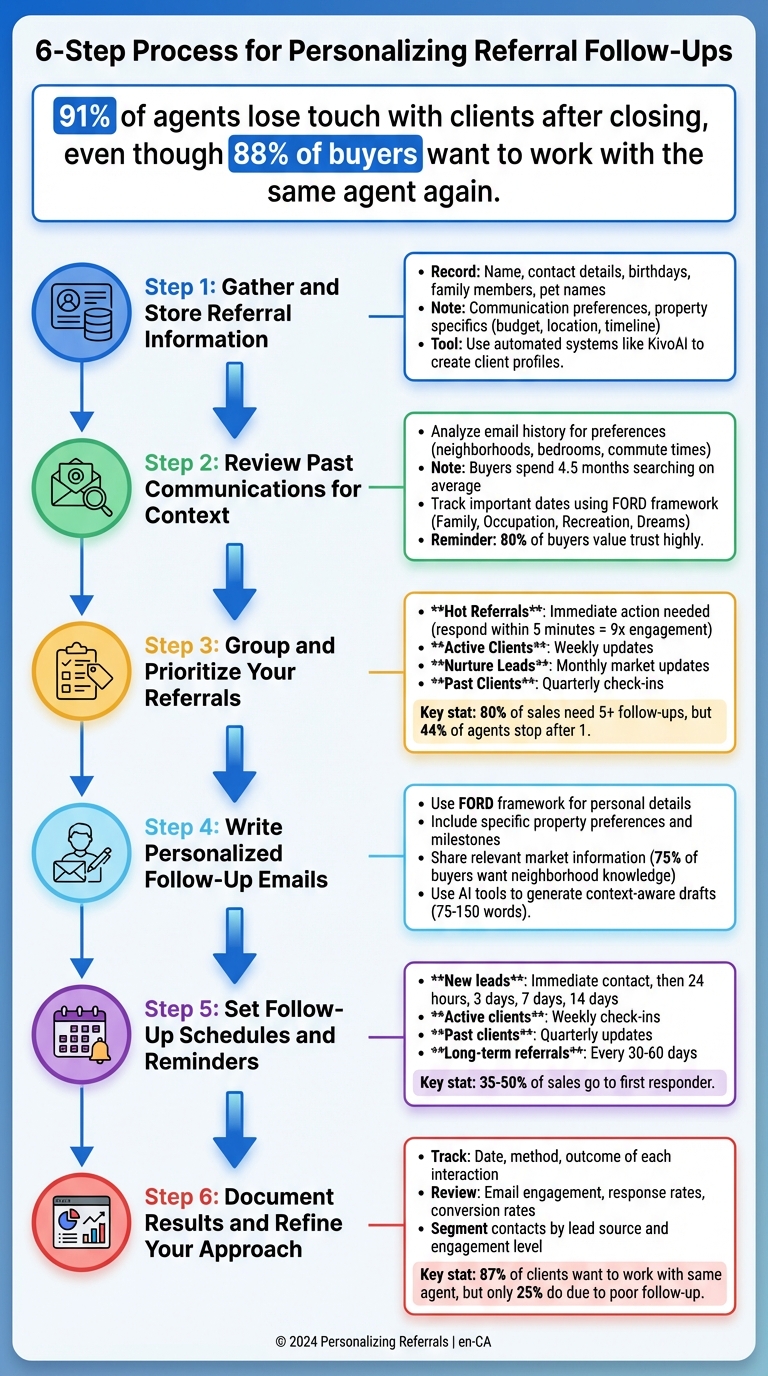
91% of agents lose touch with clients after closing, even though 88% of buyers want to work with the same agent again. The gap? Poor follow-up strategies. Referrals already come with trust built-in, but generic follow-ups can erode that trust fast. Personalizing how you connect with referrals boosts loyalty, conversions, and long-term relationships.
Here’s how to make every referral count:
- Gather detailed client info: Beyond contact details, note preferences, milestones, and communication styles.
- Review past conversations: Reference specific details to show you’re paying attention.
- Organize referrals: Group them by engagement level (hot leads, active clients, nurture leads, etc.).
- Craft tailored emails: Mention personal details like family or goals, and include relevant market insights.
- Set follow-up schedules: Timely, consistent outreach is key - most sales require 5+ follow-ups.
- Track results: Record responses and refine your approach based on what works.
Tools like KivoAI can simplify organizing client data and automating reminders, so you can focus on meaningful interactions. The key? Consistency and personalization. Most agents stop after one follow-up - don’t be one of them.
Week 4/6: Building a Referral Machine (Smart Follow Up Systems)
Step 1: Gather and Store Referral Information
Building a strong foundation for personalized follow-ups starts with the information you collect. A name and phone number are just the beginning - capturing additional details allows you to create meaningful connections. Every piece of information you gather adds a personal touch to your follow-ups.
Record Client Details and Preferences
Start with the essentials: full name, phone number, email address, and physical address. Then, go deeper by noting personal details like birthdays, anniversaries, family members' names, and even pet names. These small details can transform a routine follow-up into a more heartfelt interaction. Also, make sure to record each referral's preferred method of communication and the best times to reach them. While texting is popular among 94% of agents7, it's crucial to respect individual preferences. Additionally, document property-related specifics such as their current home, budget, desired location, and timeline. This helps you tailor your approach to meet their unique needs7.
"The more context you have about each relationship, the more meaningful your interactions become." – RealOffice3607
Once you've gathered these details, focus on organizing them efficiently.
Use Tools to Organize Information Automatically
Manually managing client data can be overwhelming, especially when business is booming. Tools like KivoAI can simplify this process by automatically creating client profiles from email exchanges. These platforms connect to your inbox, tracking transaction history and important dates, ensuring no referral is overlooked.
Dedicate an hour each week to updating your database - adding new notes, refreshing contact details, and ensuring everything stays current8. The value of your referral database lies in how well-organized and accessible it is. By keeping it up-to-date, you foster trust and build lasting relationships with your clients.
Step 2: Review Past Communications for Context
Before sending your next follow-up, take a moment to review your email history. This step builds on your detailed client records, ensuring a more personal touch in your outreach. By referencing specific details from earlier exchanges, you not only show you’ve been paying attention but also build trust - something 80% of buyers consider highly important 3. This context helps you focus on what truly matters to each client.
Analyse Email History for Key Details
Your email history is a goldmine for understanding each referral's priorities. Look for clues about their preferences, like desired neighbourhoods, number of bedrooms, or acceptable commute times. Keep in mind that buyers typically spend about 4.5 months searching for a property 3. Knowing their motivation - whether it’s relocating for work, downsizing, or making room for a growing family - allows you to frame your follow-ups around their goals, rather than just pushing listings.
Pay attention to their preferred tone and communication channel, whether it’s email, phone, or text, so you can align your approach accordingly.
"By taking the time to personalize your emails, you can make a lasting impression and show that you genuinely care about their unique situation." – Matt Kachevas, FinallyConnect 2
Also, revisit any commitments you’ve made, like sending a valuation report or following up on a specific property. This reinforces your reliability. Reviewing their responses to previously shared listings can also help you identify which features are non-negotiable versus simply nice-to-have, making your future recommendations more relevant.
Track Important Dates and Events
Emails often contain more than just transactional details - they can reveal personal milestones worth noting. The FORD framework - Family, Occupation, Recreation, Dreams - can help you identify meaningful events, like a child’s graduation, a job change, or even a favourite pastime. Whenever these details come up, make a note of them.
Tools like KivoAI can make this easier by automatically identifying milestones from your email history and setting reminders for birthdays, home anniversaries, or other key dates. Mentioning these details in your follow-ups not only strengthens trust but also helps you stand out from the 91% of agents who fail to maintain contact with past clients 1.
Step 3: Group and Prioritize Your Referrals
Now that you've gathered client details and reviewed your email history, it's time to organize your referrals into focused groups. This step ensures that each referral gets the right level of attention and follow-up. By categorizing referrals based on their engagement and likelihood to convert, you can direct your efforts where they’ll have the most impact. This approach also sets the stage for crafting personalized follow-up messages tailored to each group.
Sort Referrals by Engagement Level
Start by dividing your referrals into categories based on their engagement. Use the client information and email history you’ve already reviewed to guide this process.
- Hot Referrals: These are the leads ready to act immediately - think of those requesting valuations or attending open houses. Responding within the first five minutes can increase engagement by up to nine times 10.
- Active Clients: These are buyers or sellers already in the process. Weekly updates on market trends or new listings will keep them informed and engaged 4.
- Nurture Leads: These are potential clients showing interest but not ready to act for several months. Monthly market updates and quarterly equity reports work well for keeping them engaged 39.
- Past Clients and Sphere of Influence: These contacts don’t require constant communication. Quarterly check-ins and twice-yearly personal messages are enough to stay on their radar without overwhelming them 4.
To refine these categories, track behavioural signals like email opens, alert clicks, and website visits. Tools like KivoAI can automatically identify these engagement patterns from your email history, saving you the hassle of manual tracking. Once sorted, focus your attention on those most likely to convert.
Prioritize High-Potential Referrals
Quick responses are key to boosting conversions 10. Within each category, some referrals will stand out as higher priority. Pay special attention to your most loyal contacts - past clients who’ve successfully referred others or those with whom you’ve built strong trust. While 87% of past clients express loyalty, only 25% actually follow through due to inconsistent follow-up 1. Prioritizing these VIP referrers and recent closings ensures timely engagement.
For new referrals, act fast and set a tiered follow-up schedule. Respond to fresh leads immediately, follow up periodically with active prospects, and use longer intervals for nurturing leads. Keep in mind that 80% of sales require at least five follow-up attempts, yet 44% of salespeople stop after just one 10. By prioritizing high-potential referrals, you can deliver timely, tailored follow-ups while maintaining consistent communication across all your contacts.
Step 4: Write Personalized Follow-Up Emails
Now that you’ve organized your referrals, it’s time to focus on crafting follow-up emails that truly connect. Forget generic templates - personalized messages that reflect specific details about your clients can make all the difference. These tailored emails not only grab attention but also build trust and loyalty.
Include Specific Personal Details
When personalizing your emails, think about the FORD framework - Family, Occupation, Recreation, Dreams. This approach helps you show genuine understanding of your client’s needs. For example, you could reference the date of a recent property viewing, comment on their feedback about a kitchen layout, or mention their preference for a fenced yard 311.
Personal milestones are another great touch. Acknowledge birthdays, anniversaries of home purchases, or even a child’s graduation to make your communication more meaningful 1213. If they’ve mentioned specific must-haves - like being near a certain school, needing a two-car garage, or worrying about commute times - address these directly. Wrap up your message with a clear and simple call-to-action, such as asking, “Would Tuesday or Thursday work better for a quick chat?” 13.
Once you’ve added these personal touches, take it a step further by including timely and relevant market information.
Share Relevant Market Information
Clients value agents who know their stuff, especially when it comes to the local market. In fact, 75% of buyers consider neighbourhood-specific knowledge a top priority 3. Use this to your advantage by sharing insights tailored to their area of interest. For example, you might update them on upcoming infrastructure projects, new businesses opening nearby, or market trends that could affect their buying or selling decisions 1415.
If they’re eyeing a particular neighbourhood, provide comparable sales data or suggest properties that fit their criteria. You could even mention broader trends, like the expected spring 2026 market recovery, which is projected to be fuelled by pent-up demand 15. Addressing larger economic concerns - such as trade uncertainties between Canada and the U.S. or changes in federal immigration policies - can also reassure clients who might be hesitant to move forward 1516.
Use AI to Generate Context-Aware Drafts
Let’s face it: personalizing every email can be a time sink. That’s where AI tools come in handy. With all the client details you’ve gathered, tools like KivoAI can help streamline the process. For instance, KivoAI can analyze your email history and client preferences to draft messages that align with past conversations and specific feedback 17. These drafts are concise (typically 75–150 words) and personable, saving you time while keeping the tone professional and friendly 13.
Of course, AI isn’t perfect. Be sure to review and tweak the drafts to ensure they reflect your personal style and voice. By automating the heavy lifting, you can focus on fine-tuning your message and maintaining the personal touch that keeps clients coming back.
Step 5: Set Follow-Up Schedules and Reminders
Consistency is the name of the game: 80% of sales require at least five follow-ups, yet 44% of salespeople stop after just one attempt 10. The agents who succeed often have a solid system to stay on track. To stand out, align your follow-up schedule with each referral's level of engagement.
Create a Follow-Up Timeline
Design your follow-up plan based on how engaged the lead is. For new leads, act quickly - contact them right away, then follow up at 24 hours, 3 days, 7 days, and 14 days 103. Speed matters: 35% to 50% of sales go to the first person who responds 10. Following up promptly reinforces the connection you’ve started, building trust and increasing the likelihood of referrals.
For active clients, move to weekly check-ins. Past clients can benefit from quarterly updates, while long-term referrals might need touchpoints every 30 to 60 days 18410.
Each follow-up should be meaningful. Avoid generic "just checking in" messages. Instead, share something useful, like market trends, updates about the neighbourhood, or home valuation insights 1819. Keep in mind that only 8% of prospects convert within the first 30 days, meaning 92% of opportunities require ongoing nurturing 19.
Set Reminders for Important Dates
Automated reminders can help you stay on top of key dates and follow-ups. Record milestones like birthdays or home purchase anniversaries, so your system notifies you when it’s time to reach out 1812.
Tools like KivoAI can make this process even easier by identifying important dates from your email history and prompting timely follow-ups. This automation ensures you never miss a beat, giving you more time to focus on building authentic relationships.
Step 6: Document Results and Refine Your Approach
Keeping detailed records and reviewing your data is essential for maintaining effective follow-up strategies. This process helps you identify what works, allowing you to build stronger referral relationships over time. Without proper documentation, you risk losing valuable insights and repeating the same mistakes.
Record Follow-Up Responses and Outcomes
Make a habit of tracking every follow-up interaction. Note the date, method (email, text, or phone), and outcome of each contact. This information helps you prepare for future conversations and ensures you don’t repeat yourself unnecessarily.
Automation tools can make this process easier. For example, platforms like KivoAI can track email activity, such as link clicks, and provide insights into your relationships by automatically documenting your interaction history. Beyond these tools, it’s important to capture qualitative feedback - like a client’s positive reaction to a market update or valuation tool. These details can guide your next steps and make your outreach more relevant.
Once you’ve gathered this information, review it regularly to spot patterns and adjust your approach.
Review Performance Data
Digging into your performance data will help you understand which strategies deliver the best results. Pay attention to metrics like referral attribution, email engagement, response rates, and appointment conversions. For instance, while 87% of clients claim they’d work with their agent again, only 25% actually do - often because of inconsistent follow-up1. By identifying which referral sources and methods lead to the highest engagement, you can refine your strategy to focus on what works.
Segment your contacts based on lead source, engagement level, and where they are in your pipeline. Use your CRM's analytics tools to compare different approaches - like testing personalized emails against generic templates. This data-driven refinement ensures your follow-up efforts are always improving.
"Personal follow-up is the key to generating repeat business and referrals in real estate. By staying top-of-mind with your contacts and showing them that you care, you increase the likelihood that they'll come to you for their future real estate needs."
– Matt Kachevas, FinallyConnect1
This process turns follow-up into a reliable system, helping you consistently convert referrals into lasting relationships. By focusing on continuous improvement, you can take the guesswork out of your outreach efforts.
Conclusion
There's a striking disconnect between clients' intentions to stay loyal and the actual follow-ups they receive - about 91% of agents fail to maintain contact, leaving 87% of eager past clients untapped 15.
A well-organized follow-up system can close this gap with ease. By gathering referral details, revisiting previous conversations for context, and tracking your results, you create a process that keeps you consistently top-of-mind. It’s all about making each interaction feel meaningful rather than transactional. For example, mentioning a client’s child’s hockey season or a favourite local spot shows you were genuinely paying attention.
Tools like KivoAI make it easier to manage follow-ups while keeping them personal. This platform integrates with your inbox, analyses email conversations, builds detailed client profiles, and highlights timely opportunities to reconnect. It’s a way to maintain thoughtful outreach without the hassle of heavy manual data entry.
Persistence paired with authentic personalisation can make all the difference. Consider this: 80% of sales require at least five follow-ups, yet 44% of agents stop after just one 610. By consistently offering value - whether through market updates, celebrating milestones, or simply checking in - you position yourself as the go-to agent whenever your clients, or their connections, need assistance.
FAQs
Tags
Ready to fix follow-up?
Try inbox-first relationship management free for 14 days. No credit card required.
Start Free Trial