
Table of Contents
Best Practices for Real Estate Email Segmentation
Segment contacts by intent, location and behaviour to raise engagement, protect deliverability and boost ROI; start with 2–3 segments and use automation.
Best Practices for Real Estate Email Segmentation
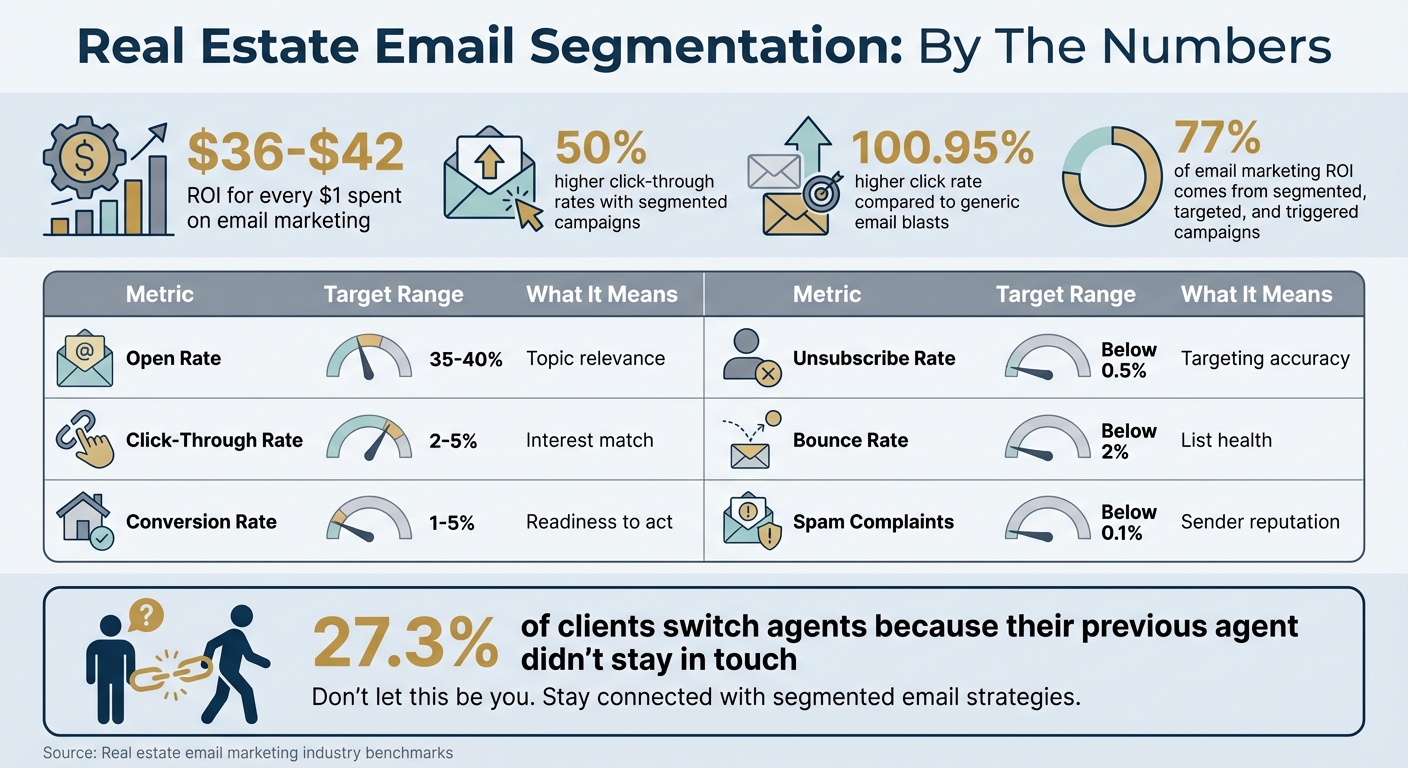
Email segmentation is one of the most effective ways for real estate agents to connect with clients. By dividing your contact list into targeted groups - like buyers versus sellers, location, or transaction stage - you can send emails that are tailored to specific needs. This approach boosts engagement, saves money compared to rising digital ad costs, and delivers a high ROI of $36–$42 for every $1 spent.
Key takeaways:
- Segment by intent: Buyers want property updates; sellers need market trends.
- Use location: Send hyper-local updates, like neighbourhood-specific listings.
- Track behaviour: Tailor emails based on client actions, like viewing listings.
- Keep lists clean: Regularly update and remove inactive contacts to maintain deliverability.
- Leverage tools: Automation platforms like KivoAI simplify segmentation and follow-ups.
Start simple with 2–3 segments, then refine over time. Segmented campaigns see up to 50% higher click-through rates and better engagement. Tailored emails not only help build stronger relationships but also ensure you stay top-of-mind with clients.
How To Create Smart Real Estate Marketing Emails That Actually Convert
How to Segment Your Real Estate Contacts
Breaking your contact list into specific groups is key to crafting messages that feel personal and relevant. Instead of sending the same email to everyone, tailor your communication to match each person's unique situation. Here's how you can effectively divide your list.
Buyer vs Seller Status
Start by separating buyers from sellers. Each group has different needs: buyers are looking for property listings, mortgage advice, and neighbourhood insights, while sellers are more interested in market trends, staging tips, and home improvement suggestions. Mailchimp highlights the importance of this approach, stating, "One thing we can say with complete confidence . . . is that segmenting your email marketing lists has an overwhelmingly positive impact on the engagement of your subscribers" 2. Use tags to identify their intent - someone attending a webinar might lean towards selling, while a guide downloader is likely a buyer.
Geographic Location
Location matters. Tagging contacts by neighbourhood, postal code, or city allows you to send hyper-local updates. For example, a condo buyer in downtown Toronto won’t be interested in detached homes in Mississauga. By targeting specific areas with relevant market data and listings, you can deliver highly tailored content 4.
Demographics and Behaviour
Group your contacts based on age, income, family status, or even their behaviour, like email opens, link clicks, and property searches. For instance, if someone frequently clicks on "luxury homes", automatically tag them as a high-end buyer 6. You can also send short surveys a couple of times a year to check where they are in their real estate journey and update your records accordingly.
Transaction Stage
Organize contacts by their stage in the buying or selling process. Whether they’re new leads, active buyers, or past clients, tailor your communication to meet their needs. This approach not only builds trust but also keeps you top-of-mind. Did you know that 27.3% of clients switch agents because their previous one didn’t stay in touch 6? Including potential sellers and past clients in your segmented communication plan helps maintain long-term relationships.
Best Practices for Email Segmentation
Once you've figured out how to divide your email contacts, the next step is creating a system that works seamlessly in your day-to-day operations. The idea is to keep your list manageable without wasting hours on manual updates or creating segments you’ll never actually use.
Clean and Maintain Your Email List
A well-maintained email list is key to effective targeting. Regularly review your list by exporting it into a spreadsheet to identify any missing information, like street addresses, phone numbers, or full names. This helps you spot gaps in your targeting efforts. Be sure to remove contacts from purchased or rented lists immediately - these sources often include spam traps that can harm your sender reputation. Even a small spam complaint rate of 0.1% can push your emails straight into junk folders 8.
Set aside time each week to merge duplicate entries, fix synchronization errors, and monitor key metrics such as "Last email opened" or "Recent conversion date" to identify your most engaged contacts. Create a dynamic segment for subscribers who haven’t opened an email in six months, and exclude them from your regular campaigns. This will help protect your email deliverability 83. Also, keep subject lines within 41 characters to ensure they display properly on mobile devices 3.
Once your list is clean, start segmenting with clear and straightforward categories.
Start with Simple Segments
After cleaning up your list, focus on creating a few basic segments rather than diving into overly complex micro-segmentation. Start with two or three simple categories, such as recipient type (clients, prospects, or leads) and potential value (e.g., A for active buyers/sellers, B for those ready to act soon, and C for longer-term prospects) 2. Here’s why this works: segmented campaigns can achieve 50% higher click-through rates, and 77% of email marketing ROI comes from segmented, targeted, and triggered campaigns 11.
"Start with just 2-3 segments based on your most obvious audience differences. You can continually refine and expand your segmentation strategy as you gather more data and learn what resonates with each group." - Sophia Bernazzani Barron, HubSpot 11
Use dynamic lists that update automatically instead of static ones 9. For instance, you could create a "Quick Win" segment for new subscribers who’ve opened or clicked an email within the last 14 days. This lets you engage with their high level of interest while it’s still fresh.
Use Tools like KivoAI
To simplify your segmentation process and keep your client insights current, automation tools can be a game-changer. Manual data entry is time-consuming and prone to errors. Tools like KivoAI connect directly to your email inbox and automatically organize client data. It creates detailed profiles with transaction history, tracks deal stages, and even suggests opportunities to reconnect - all without requiring you to log details or update fields manually. By analyzing your email patterns, KivoAI helps you figure out which contacts need attention and when, taking the guesswork out of follow-ups. This approach ensures your segments stay updated based on real interactions, not outdated manual inputs.
Segmentation Strategies That Work
Once you've established your basic segments, it's time to fine-tune your approach. Tailor your strategies to align with each contact's journey - whether they're actively looking to book a showing or simply browsing neighbourhood options. Focus on lead urgency, property interests, and key client milestones to make your communication more effective.
Hot Leads vs Nurtured Prospects
When it comes to hot leads, timing is everything. These "A-list" contacts are ready to buy or sell now, so they need immediate attention. Send them property updates, virtual tours, and clear calls-to-action like "Schedule a showing" or "Find out your home's value today."
On the other hand, nurtured prospects - your "B-list" leads - require a longer-term approach. These contacts may not be ready to act immediately but are still interested. Keep them engaged with resources such as market trend reports, home maintenance tips, or advice on improving ROI. Automate drip email campaigns that slowly guide them through the process: start with a welcome email, follow up with market insights, introduce property updates, and eventually include a call-to-action. Over time, this strategy can help nudge them into the "A-list" category.
Interest-Based Preferences
Not all clients are after the same type of property. Segmenting contacts based on their specific preferences - like luxury homes, downsizing options, investment properties, condos, or pet-friendly areas - lets you send them listings that genuinely match their needs. You can gather this information through tagging, website activity, or simple surveys.
"If you're not segmenting your email list, you're doing it wrong. Segmentation is the key to sending targeted, relevant messages that resonate with your audience."
– Jodie Cordell, Writer, The Close 12
Use this data to craft attention-grabbing subject lines. For example, "New luxury condos in Yaletown" or "Pet-friendly homes near High Park" can significantly boost open rates. If you combine multiple tags - like "Investor" + "Condo" + "Specific Neighbourhood" - you can refine your campaigns even further, delivering highly relevant content.
Milestone-Based Segmentation
Certain dates or events provide natural opportunities to reconnect with clients. For instance, the one-year anniversary of a home purchase is a great time to send a thoughtful card or message. This simple gesture can strengthen loyalty and even encourage referrals 13. Other milestones to consider include the immediate post-closing period, life events like a new job or a baby, or client actions such as attending an open house or viewing a property.
Leverage your CRM to automate these personalized touchpoints. However, many agents find that standard CRMs often fail to maintain these connections over the long haul. For example, referencing a specific event - "It was great meeting you at the open house on January 15" - makes your follow-up feel more genuine. Some AI-powered tools can even notify you about life events, such as job changes, so you can reach out at just the right moment.
Measuring and Improving Your Segmentation
Once you've implemented segmentation strategies, the real work begins - measuring and tweaking your approach to ensure consistent results.
Segmentation isn't a "set-it-and-forget-it" process. Markets evolve, and customer needs shift, so keeping an eye on performance is crucial. Regular reviews help you spot underperforming segments that could hurt your sender reputation.
Track Key Metrics
To gauge how well your segments are performing, focus on these key metrics:
- Open rates: Aim for 35–40%.
- Click-through rates: Target 2–5%.
- Conversion rates: Look for 1–5%.
- Unsubscribe rates: Keep these below 0.5%.
- Bounce rates: Maintain below 2%.
- Spam complaints: Stay under 0.1% to protect your sender reputation 711.
Monitoring deliverability and list health is essential. For instance, if a segment has a high unsubscribe rate - anything above 0.5% - it might mean your targeting or email frequency needs adjustment. As Mailchimp aptly puts it:
"One thing we can say with complete confidence . . . is that segmenting your email marketing lists has an overwhelmingly positive impact on the engagement of your subscribers" 2.
| Metric | Real Estate Benchmark | What It Tells You |
|---|---|---|
| Open Rate | 35–40% 7 | Whether the segment finds your topic relevant |
| Click-Through Rate | 2–5% 7 | If your offer matches the segment's interests |
| Conversion Rate | 1–5% 7 | Whether the segment is ready to act |
| Unsubscribe Rate | Below 0.5% 7 | If targeting or frequency needs adjustment |
| Bounce Rate | Below 2% 7 | The technical health of your contact list |
| Spam Complaints | Below 0.1% 7 | Critical for maintaining sender reputation |
These metrics give you the insights needed to fine-tune your emails, ensuring they’re timely and relevant.
A/B Test Campaigns
Experimenting within your segments is a powerful way to discover what resonates. For example, test subject lines that include neighbourhood names against generic ones to see which generates better open rates 7. Similarly, compare calls-to-action like "Find Out How Much Your Home Is Worth" versus "Learn More" to find which drives engagement 7.
You can also try different content formats. Some audiences might prefer video tours of properties, while others may engage more with written market reports 11. The numbers back this up: segmented campaigns can achieve a 100.95% higher click rate compared to generic email blasts 11.
By consistently testing, you’ll gather data that keeps your segmentation relevant and effective.
Update Segments Regularly
Effective segmentation requires ongoing maintenance. Plan to review and adjust your segments every quarter to reflect changes in client behaviour, market conditions, or status 9.
Take immediate action on hard bounces to maintain a healthy bounce rate 7. Before removing inactive contacts, consider running a win-back campaign 105. Additionally, sending short surveys 2–3 times a year can help you stay informed about your clients' current real estate goals 6. This proactive approach ensures your data stays accurate and reduces the risk of losing touch. After all, 27.3% of sellers switch agents because their last agent failed to stay in contact 6.
Conclusion
Email segmentation helps deliver content that's tailored and timely, whether you're reaching out to first-time buyers, investors, or past clients. This approach not only strengthens relationships but also drives impressive results, with an average ROI of $36 for every $1 spent 114.
Taking segmentation a step further, automated tools like KivoAI can simplify the process. By analysing email conversations, these tools automatically organise contacts and uncover insights, such as when a previous client might be ready to buy or sell again or which prospects are showing early signs of interest - all without the need for manual data entry.
Start with basic segments like buyer versus seller, transaction stage, or geographic area. Then, adjust and fine-tune your strategy as you identify what resonates most with your audience.
FAQs
Tags
Ready to fix follow-up?
Try inbox-first relationship management free for 14 days. No credit card required.
Start Free Trial